|
GAIA AND THE ART OF FIGHTING
MARINE OIL POLLUTION
More than
two decades ago, James E. Lovelock proposed the "Gaia"
hypothesis: The biosphere of earth acts as a single organism
trying always to maintain optimal conditions for its life,
and is capable of manipulating nature to counteract against
adverse environmental changes.
This hypothesis has had many illustrious
proponents (Lynn Margulis, for one), and at least as many
illustrious opponents (Richard Dawkins, for one).
The Gaia concept became thought fodder for some
mystic minded persons and cults and thus lost a lot of
credibility with time. But the concept is not wholly dead
and in many circles remains as controversial today as it was
yesterday. However, it seems to have gained a new friend in
an environmental discovery which seems to fit snugly within
its framework.
While studying the oil pollution in the Arabian
Gulf, researchers Dr Naser Sorkhoh, Professor Redha Al-Hasan
and Professor Samir Radwan from Botany and Microbiology
Department of Kuwait University, in collaboration with Prof.
Thomas Hoepner of ICBM, University of Oldenburg, discovered
the phenomenon of natural bioremediation of the oil-polluted
Gulf as reported in NATURE, vol. 359, September, 1992.
Before we go into details about their discovery,
let us talk about marine oil pollution in general.
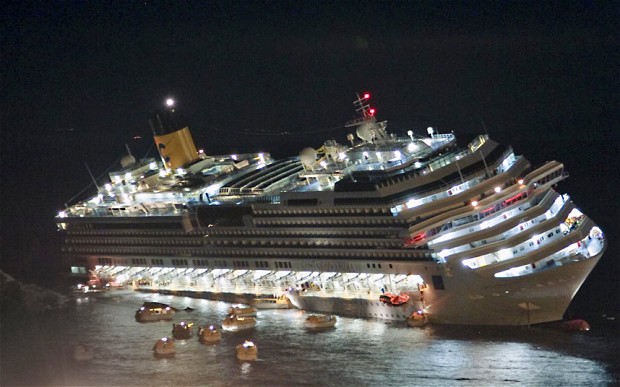
Oil pollution in the sea is a constant threat to
global ecology. This threat has become more and more acute
in the last few decades which saw disasters leading to
spillage of huge quantities of oil in the sea. Some of these
well-known oil spill disasters are the Amoco Cadiz spill in
1978, the Ixtoc 1 disaster in 1979, the Exxon Valdez
disaster in 1989 and the Braer spill at Shetland Isles in
1993.
There are three general approaches for dealing
with oil pollution problems: the mechanical, the chemical
and the biological. For the best possible reclamation of
polluted land and sea, a combination of all three methods is
required.
In sea, the mechanical approach involves
skimming the oil off the water surface.
Oil polluted areas can be sprayed with
detergents and chemicals which can react with hydrocarbons
and break them down to simpler, non-polluting compounds.
This constitutes the chemical approach in fighting oil
pollution. This approach has one drawback. The chemicals
used can themselves cause pollution and prolonged and
intensive use of these chemicals is likely to invoke the law
of diminishing returns.
The third front of attack on oil pollution
involves employing biodegradation techniques using
microorganisms. This process is called bioremediation.
The principle is simple enough. There are
numerous microorganisms found in nature, which have the
capacity of ingesting hydrocarbons and excreting simpler,
non-polluting compounds. The oil-polluted areas are seeded
with a cocktail of such microorganisms, along with nutrients
which can stimulate the growth of these microorganisms.
Given sufficient number of microorganisms and sufficient
time, this method goes a long way in helping towards removal
of oil-pollution.
But that is not all. There seems to be yet
another way of fighting oil pollution: the nature's way.
This was discovered, ironically enough, in the
wake of the worst oil pollution of this century.
This environmental crisis was precipitated by
the Iraqi forces during their occupation of Kuwait, from 2nd
August 1990 to 26th February 1991. At a conservative
estimate, one million tons of oil was spilled due to the
actions of the Iraqi forces in Kuwait. More than nine
hundred Kuwaiti oil wells were deliberately damaged.
The oil released into the sea alone severely polluted about
770 km of the Kuwait and Saudi Arabia coasts.
Rigorous efforts were made to rectify the
pollution problem. It has now been fourteen years, but the
seas and deserts are still not completely free of oil,
though the pollution levels have been much reduced.
This brings us to the discoveries of the
researchers, Sorkhoh, Al-Hasan, Radwan and Hoepner,
mentioned above.
These scientists discovered the occurrence of an
extensive growth of mucilagenous mats over oil layers in
Saudi coasts. These mats covered the regularly inundated
lower part of the oiled intertidal zone in vast sectors. The
major components of these mats were marine blue-green algae
called cyanobacteria. The predominant species of
cyanobacteria found in these mats were Microcoleus
chthonoplastes, Phormedium corium, Spirulina subsalsa and
Oscillatoria sp.
Cyanobacteria are photosynthetic. Many species of
the cyanobacteria are highly tolerant to severe environments
including high temperature and salinity. Some species of
cyanobacteria can grow at temperatures up to 75 degrees
Celsius. The cyanobacteria produce large amounts of
mucilage.
Numerous non-photosynthetic bacteria were found embedded in
these mats, the major ones being Rhodococcus sp. and
Pseudomonas sp. Research showed that these bacteria are
highly efficient in biodegrading the hydrocarbons found in
crude oil.
Immobilizing such oil degrading bacteria within
the cyanobacterial mucilage protects them from being washed
out in the open sea, and in addition, provides them with
oxygen from the photosynthetic partner. Oxygen is essential
for hydrocarbon biodegradation. Further, evidence exists
that the cyanobacterial component of the mats may also be
involved in direct biodegrading of oil. Thus, in the
microbial mats an unusually efficient oil-degrading system
is being employed by nature to clean the seas of the
oil-pollution and restore environmental balance.
This natural phenomenon is very much in
operation even today and is helping the human endeavors in
fighting against marine oil pollution.
Gaia???
Ahmed A
Khan
Ahmed is a Canadian writer who has
written a book - Ghelenden .
TO
RETURN TO FEATURES INDEX CLICK HERE |