|
ANOTHER
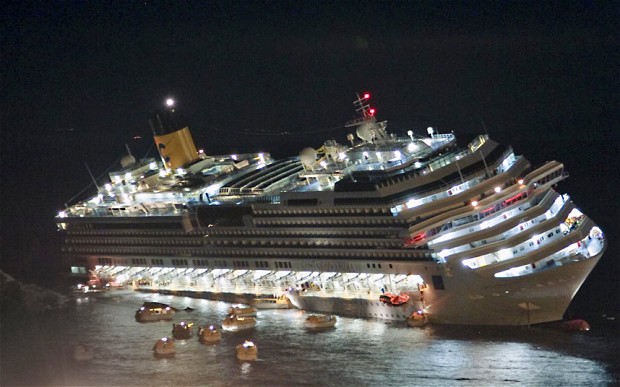
MARINE DISASTER
The words reproduced here have
circulated round the safety departments of a number of organisations. They
describe the loss of a survey ship and the resulting distress suffered by the
crew in a delightfully laconic style which almost subversively lets us know how
the accident could have been prevented and how at every stage mistakes continued
to be made.
The names of the ship, the
owner and the client have been removed, but this makes no difference to the
strength of the narrative.
It
was the Xxxx Xxxxxr Survey Vessel. All
got off ok and no injuries. This
past Wednesday, the XXX XXXX sank about 300 miles offshore of
Iran
.
Around
6AM
in about 1 meter seas, the
navigator went down to the engine room to lower the UBSL pole, so that we could
begin surveying. The chain used to
lower the pole suddenly snapped. There
was no safety chain attached and the flange at the top of the pole, which would
have prevented the pole from dropping all the way through the hole flew off.
Therefore,
the USBL pole fell 3000 meters down to the bottom of the ocean, leaving a 12
inch hole in the ships hull. As you
can expect, water started flooding the engine room.
Crew
members tried to fit a metal plate over the hole, however this proved to be
impossible due to the pressure of the water.
Non-essential personnel, were immediately transferred by FRC to the chase
boat. Meanwhile, the crew continued
to try to contain the flooding.
The engines and ship power
were quickly shut down, and emergency power was turned on.
The pumps on the OV and the MS proved too small to be effective, so the
engine room's watertight door was closed & dogged down.
Unfortunately, this door was not exactly watertight, and water proceeded
to flood compartment next to the engine room.
Meanwhile, MAYDAY calls were
issued from both the OV and the MS. The
first to respond was a Coalition Warship, which later turned out to be the USS
SEATTLE (AOE 3), a fast combat support ship.
Since it would take a while for the
SEATTLE
to arrive, a Canadian C-130, and a
Japanese helicopter were dispatched to the location.
These
aircraft remained until the end. Soon,
a
US
helicopter also arrived carrying
with it 2 large pumps and a damage control (DC) crew to operate the pumps.
When the equipment and personnel were safely lowered onto the OV, the
helo returned to pick up and deliver a third pump.
Unfortunately,
two of these pumps became clogged with debris, and the DC crew were never able
to get them to operate. The
Commanding Officer (CO) on board the
SEATTLE
was informed by the DC crew the
only chance that the OV had to stay afloat was if divers were dispatched to try
and repair the hole.
This
solution was rejected by the CO. As
a last ditch effort, a tarp was unfurled over the side and under the keel to try
and cover the hole and slow the flooding. However,
this effort proved futile. Eventually,
the
SEATTLE
arrived on site.
The CO assessed the situation and decided that despite all efforts, the
OV was going to be a "long-term loss."
He instructed all crew and instruments to be removed and the ship was
then abandoned.
When
all crew member were onboard the MS, the Captain and Party Chief made one last
trip back by FRC to try and release the second towfish (the first was released
earlier by FSSI marine techs) and try retrieve whatever personal effects that
they could. Things retrieved
included some undergarments, camera, 3 bottles of alcohol, one flip flop (right
foot)and one Teva (left foot), various souvenirs.
However,
things such as wallets, house keys, cell phone, address book, and CD's now
reside on the bottom of the
Arabian Sea
.
It
took a few hours before the OV finally sank, but when it happened, she went down
by the port bow.
Afterwards,
the MS sailed through the floating debris and was able to retrieve the two
towfish, along with the 8 life rafts, which had automatically deployed.
The MS then began a rather rough 16 hour transit to
Muscat
,
Oman
.
While the MS was steaming, the crew of the former-OV spent the night
consuming the salvaged alcohol, and trying to sleep on spare mattresses, which
were placed on the deck for us.
Once
we arrived in
Oman
, it took many hours for officials
to take statements and issue visas. The
crew of the OV was then taken to a hotel, where we cleaned up, put on whatever
clothes we could find, and went shopping for clothes, shoes, and toiletries.
Crew
members, who were able to save their money and credit cards, supported those of
us who lost everything. We left
Oman
very late Thursday night and spent
the next 24 hours on airplanes.
The
Seattle
,
WA
based crew returned home on
Saturday afternoon, and we were met at the airport by the president of our
company, the Survey Manager, and the Engineering Manager.
One of my co-workers was also met by his family, who flew all the way out
from
Virginia
. I cannot even venture a guess on
what will be the repercussions of this event.
Besides
our personal losses, my company lost about US$2 million worth of uninsured gear,
including 20 km of fiber optic cable (10 km of which was flaked on the deck in
two 5 km pieces due to a previous incident), traction winch, a hydraulic power
unit (HPU), and lots of electronic and computer gear.
Additionally, it is unknown
how much of the data, from the survey, was recovered.
I do know that there are already gaggles of lawyers hovering around and I
am relatively certain that there will be many lawsuits between my company, our
clients and their clients.
While
this was an extremely harrowing experience, I am thankful that everyone was able
to safely get off the ship. I am
fully aware that things can be replaced, while people cannot.
We were very lucky that this happened in daylight hours in calm seas.
We were also lucky that we had a chase boat following us and a Navy
warship, so close by.
TO
RETURN TO FEATURES INDEX CLICK HERE |