|
THE TRUE PRICE OF OIL
It’s twenty-five years ago when I was
last on a rig. It was not my job, just circumstance that
put me there. March 27th 1980 was not a bad day
on the west coast of Scotland, at least, not a bad day
compared to what we usually got. As part of a Royal Navy
helicopter squadron based at Prestwick, life wasn’t bad. A
small establishment, so not too much spit and polish. A
small department, so our routine was ‘flexible’. I was one
of four para-medics based there getting extra pay for our
Search and Rescue duties, lots of time off, and plenty of
cheap booze. Usually evenings were spent either down at one
of our locals, in the NAFFI bar, or a trip out to Ayr. I
was off watch, so the beer could flow. ‘Work hard, play
hard’ was a motto we took seriously. Tonight however it was
a kit washing and general sorting out night, so it would be
a just few beers later on.
For a sailor it’s a bad sign when you’ve
just had a glass of cold frothy beer handed over and someone
shouts out that there’s a phone call for you. With no time
to take even a sip, I was at the phone. It was the duty
medic and mate of mine, JC. We were on standby for an
incident, and it would be more than one medic required. The
beer was forgotten in an instant (we did take work
seriously) as I ran to the medical centre and decked myself
in all the aircrew survival clothing that was essential for
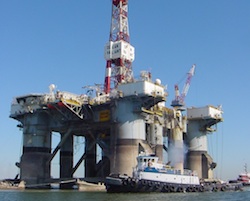
UK waters. JC filled me in on what had happened. An oil
rig, the Alexander Keilland, had capsized in the Ekofisk
field. I didn’t have a clue where that was. The west coast
of Scotland was familiar, with the Inner and Outer Hebrides,
but this was totally new. Then again we were used to that,
having covered from Blackpool to some place near
Inverness. Suited up and ready to go, we grabbed all the
medical equipment, then JC and I were driven down to ‘the
line’, which wasn’t a line at all but a taxiing area for the
Sea Kings (or ‘cabs’ as we called them) and the Ops room.
The medical equipment was stowed away in the cabs, and then
JC and I strolled into the Ops room to collect the life
jacket and personal life raft backpack. We strolled because
one of the aircraft handlers had told us we wouldn’t be
lifting off for at least ten-fifteen minutes whilst a fault
was sorted out on one of the cabs. I made a mental note to
see if I could bag the other cab, as I preferred flying in
one without problems, but I was old-fashioned that way.
Inside the Ops room it was as always, a
calm rush. Briefing was about to begin, so JC and I slipped
in and tried to look as though we understood what the
aircrew were being told. The weather, call signs, and
details of the incident were self-explanatory, but the
technical stuff was there for them. Not that I minded, as
they were the specialists, just as JC and I were in our
field, and we could blind them with medical science if
needed. The one bit I did note was that we were flying from
Prestwick to RAF Leuchars, staying overnight and then on to
the search zone at first light. Not what I wanted. It’s so
much better to get up, get on with the job and then get
home, but from where we were it was obvious that the
overnight stay was the best choice.
Twenty minutes later we were in the air.
I was in Rescue 02 (our call sign), the one that had had the
problem, and JC was in Rescue 07. For a medic the journey
is the boring bit, especially when it’s dark so there’s not
even any scenery to look at. Military helicopters can be
cold, noisy, and vibrate like hell, and my seat was a
foldable canvas affair with a negative comfort score, so a
journey of a few hours or so was no limousine ride. But
hey, if I couldn’t take a joke I shouldn’t have joined, as
anyone that I mentioned this to would have replied. I
passed the time wondering what the problem had been with
Rescue 02, and whether it was going to stay unfixed.
A transit room at RAF Leuchars is not a
home from home. It abused the privilege of being basic. We
had arrived late at night, and so didn’t really care. All
we wanted to do was to get to bed as soon as possible as we
were to be up very early the next day, although as it was
already after midnight technically it was later the same day
that we would be getting up.
After an early call and a quick breakfast
it was time to get started on the serious business. There
was no time for the luxury of feeling tired. The crew had
the co-ordinates of the search area we were assigned to, and
we were impatient to get going and see if we could save
anyone. The day was fair, with good visibility, so hopes
were high. Lift off couldn’t come soon enough as we were
all impatient to get on with the task. I still didn’t know
exactly where Ekofisk was, but I did know that it was a long
way off for anyone in the water. I had already calculated
the survival times for different sea temperatures and the
North Sea was not at all generous in that respect.
In transit to the rescue site I assessed
the chances of survivors. The weather was clear with high
broken cloud, so it would be easy to spot anything. However
there was still a good wind blowing, which would reduce our
time in the air as the helicopters would have to fight
against it. A fairly large wave height would also make
keeping track of any sightings more difficult, but that was
at least one task we had trained and practised on, so all in
all, the odds were in our favour, if only slightly.
Eventually we neared our search area.
One good thing about this was that I could stand behind the
co-pilot and be the lookout on the left-hand side of the
cab, which was a bit more comfortable than sitting. It was
decided that we would start at a higher altitude than the
usual low-level approach as that would enable us to spot
anything that bit quicker, and speed was vital. We soon
found that there were plenty of flotsam for us to spot, and
we began almost a rollercoaster ride of gaining altitude,
sighting an object, and so swooping down to investigate. It
was the most frustrating time ever, and curses were being
uttered, because no contacts were human. The worst ones
were when we spotted something that was bright orange,
because that raised the expectation of it being some sort of
survival equipment, and so a person! But it never was. I
rapidly came to hate those bright orange sightings. We were
wasting vital survival time, but of course there was no way
we could consider not spending time making sure there was
no-one clinging to any thing that we saw.
Time, that had gone so very slowly when
we were getting to our search area, now ran out so fast it
was unbelievable. Sea Kings are excellent helicopters, but
like all aircraft they can only stay airborne for a finite
amount of time, and we had reached our limit. It is
impossible to describe how you feel when you have to leave
empty-handed. The frustration is already there, along with
impatience, but now desperation, and a sense of abandoning
someone in need is added. As soon as the search area was
left, with nothing to do now, I could only sit there and
think ‘what if?’ Should we have turned one way not the
other, started somewhere else, climbed higher to begin
with? It didn’t matter now. Re-fuelling and returning if
possible, otherwise home with tails between legs.
My musings were interrupted with a sudden
flurry of comments and activity by the pilots, observer and
aircrewman. Rescue 07, the one I thought was the better
cab, had developed a sudden hitch and had to land very
quickly on an oil rig or else ditch, so we landed on an
adjacent rig whilst the problem was analysed. This was
unexpected and quite exciting. I looked forward to meeting
the oil rig workers who no doubt would be grateful to us for
helping there stricken co-workers, and would look upon us as
heroes. No doubt there would be a crowd of them gathered
around us all the time we were there.
It was almost as if we were invisible.
Everyone was just getting on with their work, and hardly a
second glance came our way. A flight deck crewman led us
down to the eating quarters, where it was a surprise to find
that I was ravenous, and a huge surprise to find steak on
the menu, and help yourselves to whatever you want! This
was Christmas and birthdays all at once, and a plate piled
high was soon devoured. Sitting back, I pretended to listen
to the aircrew discussing the problem with our sister cab,
and looked idly round at the rig workers. If any were
affected by what had happened to the Alexander Keilland I
couldn’t see it. They were all just getting on with their
business. I realised then that this was just an outing for
me, and soon I’d be safely back on terra firma able
to take a stroll round the town should I so wish, but they
were stuck out here for weeks or even months, and had to
live with the worst that the North Sea could throw at them
all the time. Then I remembered a quote I’d read about
courage not always being in the roar of a lion, but in the
quiet voice that says just keep carrying on. The real
heroes were all around me, quietly carrying on.
It’s now twenty-five years later, and
more oil rig disasters have happened, more lives lost, more
oil discovered. Technology has improved beyond imagination,
allowing oil to be claimed from ever more hostile
environments. The one thing that will not have changed is
the quiet courage of the men who have to work there.
Footnote.
We lifted off
from the rig a few hours later. Rescue 07 had to wait until
the next day before it was fit enough to fly. I had another
three years on Search and Rescue, landing on some varied and
bizarre things, but never another oil rig. And I never did
find out who had my beer.
Clive Brook
TO
RETURN TO FEATURES INDEX CLICK HERE |