|
THE SAFETY CASE or WE DON'T WANT THAT
NORTH SEA S**T HERE.
At the beginning of
September 2013 I was asked to present a paper at a safety
conference in Houston which was mainly concerned with the
new rules to which all operators in US water have to
conform. These rules relate to SEMS (Safety and
Environmental Management Systems) Regulations which have
been put in place since Macondo. So they may not want that
North Sea S**t in the Gulf of Mexico, but it may be that
they have something more onerous and less effective to deal
with now. One of the themes of my presentation was the
manner in which the oil industry will do almost anything
rather than embracing any regulatory requirements.
THE SPEAKER.
I have been involved in the offshore business, mainly in the
North Sea for nearly 40 years and was surprised to realize
that I have been compiling safety cases and carrying out the
associated risk assessments for twenty years this year.
Back in my early days I was a supply ship driver, really a
person of no account. Mostly we went out there and did the
job by the seat of our pants, in many cases guessing how to
do it. The ships were low powered, vulnerable to damage and
often operating at the limit of their capabilities. But by
the mid 1980s the engine builders were producing higher
power units which would fit under the decks and the
designers were just a little less concerned about reducing
windage and so life improved. But we still did the job with
little or no guidance.
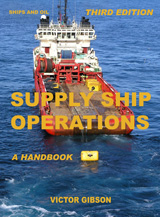
In order to remedy this situation I wrote a book –Supply
Ship Operations – which was published by Butterworth
Heinemann in 1991. This book is now in its third edition,
but more importantly it was seen by a safety manager in
1993, who thought that I might be able to help with this
safety case stuff.
THE SAFETY CASE – HISTORY
In the UK offshore oil industry no-one had ever heard of a
safety case before Piper Alpha, although that is not to say
that there had not been any problems out there. Back in 1965
shortly after it had made the first discovery of
hydrocarbons on the UKCS the rather primitive jack-up Sea
Gem was preparing to move to another location a couple of
miles away, and was beginning to jack down when two of the
legs collapsed and the rig was tipped over into the sea. 13
men died, the remainder being rescued by the British cargo
ship the Baltrover and an RAF rescue helicopter.
The result of this tragedy was the inception of the role of
OIM, the Offshore Installation Manager on all offshore
installations and mobile units operating in the UK sector of
the North Sea, and the requirement that they all be provided
with standby vessels, in case of further misfortunes of a
similar nature. The regulatory body with the responsibility
for overseeing the regulations was the UK Department of
Transport, of which the UK Coastguard was a department.
So after the inception of the Minerals Workings Act,
actually in 1971 all offshore installations in the UKCS were
provided with a standby boat, a small craft given the task
of being available to rescue anyone who fell overside, or
the whole crew if a disaster or if a helicopter fell into
the sea. It may be a symptom of the disdain with which the
oil companies viewed the regulations that the standby
vessels provided were usually former deep sea trawlers of
which many had become available due to the great Icelandic
cod war. Because of their former work they were more or less
able to look after themselves, and mostly spent their time
drifting about since they were equipped with rod and chain
steering, and were never provided with an autopilot. They
often ran out of food and water and were assisted either by
the installations they were supposed to be looking after, or
by the visiting supply vessels. And incidentally on
semi-submersibles the OIM was frequently little more than a
clerk, who did the paperwork for the rig while the
Toolpusher, sometimes now call ‘the Rig Superintendent’
remained in charge.
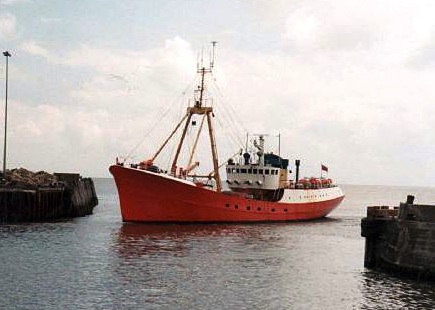
A typical
East Coast deep sea trawler - known as 'side draggers'.
PIPER ALPHA
The Piper Alpha disaster on 6th July 1988 in which 167 of
the 248 crew members died caused everyone in the business in
UK to take a deep breath. Almost immediately the government
commissioned a public enquiry chaired by Lord Cullen a
Senator of the College of Justice in Scotland.
The enquiry sought to answer two questions
1. What were the causes and circumstances of the disaster on
the Piper Alpha platform on 6th July 1988, and
2. What should be recommended with a view to the
preservation of life and the avoidance of similar accidents
in the future.
The enquiry’s findings are contained in two volumes and
resulted in 106 separate recommendations. The first 13 of
the recommendations relate directly to the provision of a
Safety Case for every offshore installation whether fixed or
mobile. Incidentally the report featured the standby vessel,
the Silver Pit. Lord Cullen said “I am entirely satisfied
that in the above respects (manoeuvring capability) the
Silver Pit was essentially unsuitable for the purpose of
effecting the rescue of survivors”.
Lord Cullen borrowed the concept of the Safety Case – making
the case for safety – from the nuclear industry. Here it had
been deemed essential that all risks should be identified
and means found to reduce them to a level considered to be
as low as reasonably practicable. It was necessary in the
nuclear industry since an accident could result in fall-out
over a large area, with consequent deaths in the community.
Subsequent to the Flixborough chemical accident in 1974
Safety Cases were also introduced for chemical plants.
The recommendations contain the following statements which
are particularly pertinent to the manner in which the risk
assessment is carried out and the resulting recommendations
acted on:
2.ii that the potential major hazards of the installation
and the risks to personnel thereon have been identified and
appropriate controls provided.
4.ii A demonstration that so far as is reasonably
practicable the exposure of personnel on the platform to
accidental events and their consequences has been minimised.
The words “so far as is reasonably practicable” are derived
from the ALARP principle which states that risks must be “as
low as is reasonably practicable”. These statements indicate
the requirement for the industry to move from a prescriptive
form of legislation to a goal setting form of legislation.
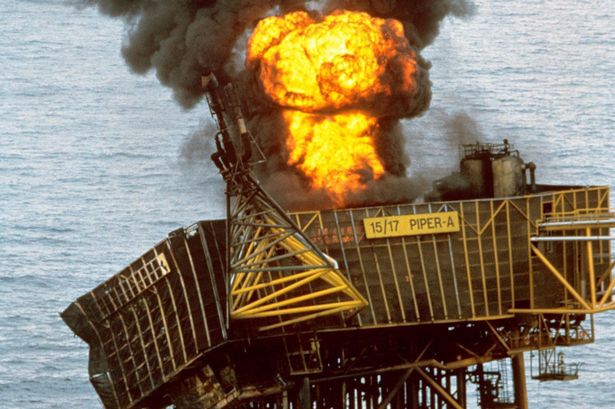
The
remains of Piper Alpha. A time to pause for thought.
THE UK SAFETY CASE LEGISLATION
As a result of the Cullen recommendations the HSE were
appointed as the single regulatory body for offshore safety,
and the HSE legal departments framed the Safety Case
Legislation in a manner which followed the Cullen
recommendations for goal setting legislation and which also
caught some existing prescriptive regulations.
The resulting statutes were as follows:
Offshore Installations (Safety Case) Regulations 1992
Offshore Installations (Prevention of Fire and Explosion,
and Emergency Response) Regulations 1995
Offshore Installations and Wells (Design and Construction,
etc) Regulations 1996.
Offshore Installations and Pipeline Works (Management and
Administration) Regulations 1995
The Safety Case regulations require that the Safety Case
should demonstrate the following:
i) that the management system is adequate to ensure
compliance with the statutory health and safety
requirements.
ii) that adequate arrangements have been made for audit and
the preparation of audit reports.
iii) that all hazards with the potential to cause major
accidents have been identified, their risks evaluated, and
measures taken to reduce risks to persons to as low as
reasonably practicable.
Related statutes and templates are as follows:
1993 IADC Mobile Unit Safety Case Template
2002 IADC European HSE Case Template
2006 The Safety Case Regulations 2005
2006 The IADC International HS&E Case Template
The original Safety Case Regulations required the Duty
Holders to put in place means of identifying and reducing
risks using the latest available technology, and so it was
expected that, at each three year revision, there would be
recommendations made, although it was likely that they would
become less costly as time passed.
Today the regulations require that a major review be carried
out every five years which seems to indicate that the HSE do
not expect there to be major technical changes taking place
as time passes, although they do constantly carry out
studies and release reports, to enhance the knowledge of the
safety practitioners, the offshore management and hopefully
the workforce.
THE SAFETY CASE TODAY.
In general the content of the UK safety cases has not
changed much since about 2000, and the IADC European
Template issued for the use of mobile unit owners remains a
good example of the way in which the job can be done. Some
people might choose to put forward the IADC 2006
International Template, but in fact it is unlikely to be
acceptable to many regimes which have a formal requirement
for a safety case.
Typically the content of a case for a mobile unit which is
suitable for submission to the HSE in UK today may have the
following sections and subsections:
SECTION 1 INTRODUCTION
Subsection 1.1 Introduction
Subsection 1.2 SCR Compliance
Subsection 1.3 HSE Case Reviews And Updates
Some of the sections are pretty straightforward. Section 1
will contain the introduction to the case, and will include
a roadmap to the rest of the document and a summary of the
content which is intended to provide information,
particularly for the workforce. Some cases contain a
checklist which is based on what the HSE inspectors look for
in the document, showing where each item of information can
be found.
SECTION 2 MANAGEMENT SYSTEM
Subsection 2.1 Policies And Objectives
Subsection 2.2 Organization, Responsibilities, And Resources
Subsection 2.3 Standards And Procedures
Subsection 2.4 Performance Monitoring
Subsection 2.5 Management Review And Improvement
Section 2 summarises the safety and environmental management
system in place. In UK this section, or more correctly the
safety management system, is usually based on HSE guidance.
And since there is a tendency for organisations to carry out
modifications to their management systems in response to
incidents, this section may require revision more often than
one might think. One of the requirements is always that the
company operates a safety observation programme, and so such
programmes are mostly in place using acronyms of one sort or
another, and sometimes monitory means of encouraging the
workforce to submit reports.
SECTION 3 MODU DESCRIPTION AND SUPPORTING INFORMATION
Subsection 3.1 General Information
Subsection 3.2 Primary Structure
Subsection 3.3 Drilling, Completion And Well Control
Subsection 3.4 Plant And Utilities
Subsection 3.5 Fire And Explosion Protection
Subsection 3.6 Evacuation And Escape Systems
Subsection 3.7 Accommodation
Subsection 3.8 Well Testing
Subsection 3.9 Diving Support
Subsection 3.10 Other Third Party Equipment
Section 3 Is usually a presentation of the technical
details, and at this point one can hear the detractors
expounding on the other locations where all the necessary
information concerning the rig equipment can be located.
Lord Cullen found that no-one actually knew all about the
equipment installed on Piper Alpha, and even today most
offshore installations are provided with different documents
containing conflicting information. During offshore visits I
have had to resort to photographing the brass plates on the
actual machines, and in some cases have had to submit the
serial numbers to the manufacturers to obtain details of the
operational limits.
SECTION 4 RISK ASSESSMENT
Subsection 4.1 Introduction
Subsection 4.2 Qualitative Risk Assessments
Subsection 4.3 Quantitative Risk Assessment (Qra)
Subsection 4.4 Temporary Refuge Integrity Assessment
Subsection 4.5 Conclusions
Section 4 may be the most important section, since it will
probably contain the risk assessment processes and their
results. This will probably be a summary of the complete
risk assessment processes since they have become more
complex as the years have passed. Lord Cullen was keen on
QRA, Quantitative Risk Assessment, calculating risk by
numbers. For this process to make any sense one has to use
records and make some assumptions and come up with a number
which is acceptable to the company and the regulators.
Usually this is an Individual Risk Per Annum of 1x10⁻³ or
giving an individual a chance of dying after working for
1000 years on the installation. Back in the day when we used
to use WOAD, the World Offshore Accident Database, we used
to reduce the risk by 50% because we thought that we were
safer in UK.
There is more. In addition to the QRA, the safety engineers
have to calculate the TR integrity (Temporary Refuge
Integrity) and the potential for the crew members to be
reduced to charred remnants by the radiation from the
blowout as they make their way to and assemble at the
evacuation stations. Also for any worthwhile safety case,
qualitative risk assessments must be carried out involving
representatives from the crew. These will hopefully result
in recommendations being made for improvements to many
aspects of the rig’s systems, operations and procedures, of
which more later.
SECTION 5 EMERGENCY RESPONSE
Subsection 5.1 Emergency Response Management
Subsection 5.2 Command And Communication
Subsection 5.3 Training For Emergencies
Subsection 5.4 Temporary Refuge Assessment
Subsection 5.5 Details Of Escape, Evacuation And Rescue (EER)
Arrangements
Section 5 may deal with emergency response. In UK the whole
emergency response process is governed by the PFEER
Regulations, (the Prevention of Fire, Explosion and
Emergency Response Regulations). So this section will detail
the ER processes, usually as a summary of another document.
The intent here is that the whole process is subject to a
degree of thought, rather than people just making an
assumption that there won’t be any accidents anyway, and so
what do we need an emergency manual for, and that any drills
and exercised are performed solely in order to conform with
regulatory requirements and are carried out in a way which
minimises interference with normal operations. In this
process the shoreside emergency processes are important, and
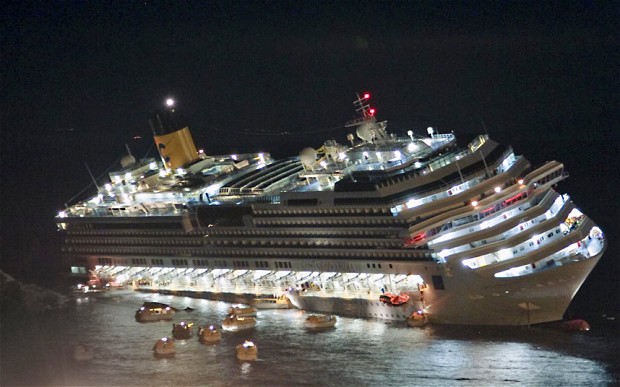
it may be worth noting that the Designated Person Ashore for
the Costa Concordia has accepted a jail sentence in Italy
SECTION 6 JUSTIFICATION FOR CONTINUED OPERATIONS
Subsection 6.1 Recommendation Assessment
Subsection 6.2 Action Plan/Recommendations
Subsection 6.3 Cost Benefit Analysis
Subsection 6.4 Recommendations Closed Out
Subsection 6.5 The Demonstration Of Alarp
And so we get to Section 6, which is presented variously by
different organisations. It can be noted that this is
usually headed ‘ Justification for Continued Operations’.
This justification is effectively that the risks to
personnel have been reduced to ‘ALARP’ (as low as reasonably
practicable). The justification may be that the company has
extensive audit processes in place with will ensure that
everything is as it should be. Or alternatively it may list
the recommendations which have been made as part of an
improvement programme together with the dates by which the
listed improvements will be carried out. One can than assume
that when the improvements have all been done continued
operations can be justified.
In addition to these sections the 2005 Safety Case
Regulations required that ‘Combined Operations’, activities
involving two or more units provided with safety cases,
should also be addressed.
SECTION 7 COMBINED OPERATIONS ADDENDUM
Subsection 7.1 Introduction
Subsection 7.2 Management Of Simultaneous And Combined
Operations Systems
Subsection 7.3 Joint Review Of Safety Aspects
Subsection 7.4 Plant Likely To Be Used During Combined
Operations
Subsection 7.5 Monitoring And Review Arrangements
THE SAFETY CASE AND SEMS
It is possible to see from the descriptions above that the
safety case template described ticks nearly all the boxes
required by SEMS.
The original elements of RP75 which were made mandatory were
as follows:
• General provisions: for implementation, planning and
management review and approval of the SEMS program.
• Safety and environmental information: safety and
environmental information needed for any facility, e.g.
design data; facility process such as flow diagrams;
mechanical components such as piping and instrument
diagrams; etc.
• Hazards analysis: a facility-level risk assessment.
• Management of change: program for addressing any facility
or operational changes including management changes, shift
changes, contractor changes, etc.
• Operating procedures: evaluation of operations and written
procedures.
• Safe work practices: manuals, standards, rules of conduct,
etc.
• Training: safe work practices, technical training –
includes contractors.
• Mechanical integrity: preventive maintenance programs,
quality control.
• Pre-startup review: review of all systems.
• Emergency response and control: emergency evacuation
plans, oil spill contingency plans, etc.; in place and
validated by drills.
• Investigation of Incidents: procedures for investigating
incidents, corrective action and follow-up.
• Audits: rule strengthens RP 75 provisions by requiring an
initial audit within the first two years of implementation
and additional audits in three year intervals.
• Records and documentation: documentation required that
describes all elements of the SEMS program.
Additional items which are part of SEMS II include:
• Developing and implementing a stop work authority that
creates procedures and authorizes any and all offshore
industry personnel who witness an imminent risk or dangerous
activity to stop work.
• Developing and implementing an ultimate work authority
that requires offshore industry operators to clearly define
who has the ultimate work authority on a facility for
operational safety and decision- making at any given time.
• Requiring an employee participation plan that provides an
environment that promotes participation by offshore industry
employees as well as their management to eliminate or
mitigate safety hazards.
• Establishing guidelines for reporting unsafe working
conditions that enable offshore industry personnel to report
possible violations of safety, environmental regulations
requirements, and threats of danger directly to BSEE.
• Establishing additional requirements for conducting a job
safety analysis.
• Requiring that the team lead for an audit be independent
and represent an accredited audit service provider.
It is worth noting that API RP 75 was voluntary guidance
which first appeared in 1991, but does not seem to have
caused much of a stir until it ceased to be voluntary and
now firstly has to be put in place and must be audited by am
appropriate independent body and have the audit results
submitted to the BSEE by November 15 2013. All the
additional items must have been addressed by June 4 2015.
Hence, just a suggestion, why not provide the installations
with safety cases. Everything required by SEMS can be
included in the safety case. This would be particularly
useful for mobile units which can move from one jurisdiction
to another.
HOW TO MAKE THE SAFETY CASE WORK
The safety case will work for any company which is committed
to the process, which will be a company which actually has a
safety culture, rather than saying that it has a safety
culture. But in any case these simple rules should be
followed:
• Follow any of the accepted guidance for the development of
a safety management system and summarise it in the case.
• Ensure that all local regulations are addressed.
• Be diligent in the research and description of the
technical details
• Ensure that adequate risk assessments into the prevention
and mitigation of major hazards are carried out.
• Develop an emergency response philosophy which will
actually work.
• Make sure that any recommendations from the risk
assessments are properly addressed, and actioned if
appropriate.
And take responsibility for safety commensurate with your
position in the organisation.
HOW TO AVOID MAKING THESE PROCESSES WORK
My reason for including the subtitle to this presentation is
that in the end we safety professionals are in the hands of
the operations people, the financial people and increasingly
the legal people. And I or my colleagues used to go out to
rigs in any area other than the UKCS they have been
frequently greeted by the words ‘We don’t want that North
Sea s**t here’.
But now one way or another the North Sea stuff is being
replaced by something, what ever part of the world you are
working in. Some may think that it would be all too easy to
write all the procedures, guidance and documentation to
conform with the regulatory requirements but actually still
carry on as one did before. This was a process often applied
by companies faced with the need to implement a quality
management system back in the 1990s and before in UK. Lord
Cullen, for instance, heard that the standby boats were
nothing more than a token gesture. They were there, but
no-one actually thought of using them.
Of course incidents and accidents are littered with
instances where the management has been warned of the
potential for misfortune and have done nothing, and their
failure to take the appropriate action. Of course one result
of this is that the managements may try to distance
themselves from everything directly related to the operation
of their units. We can identify both these approaches today,
and one thing both SEMS and the safety case processes should
reveal is the degree of commitment.
At the same time some believe that commitment leads to
exposure. If you have provided the wrong advice, or have
provided guidance which has not been followed, then the
company may be taken to court and possibly people may be
fined, or even in some cases imprisoned. The only sanction
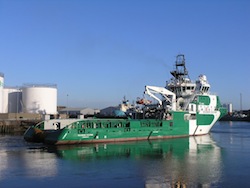
finally imposed on the companies involved when the AHTS
Bourbon Dolphin sank with the loss of eight lives out in the
Atlantic was of GBP 500,000 to Bourbon, whose handover
procedures were not followed when the Captains of the ship
changed over.
But how is it possible to avoid commitment? Norwegian
regulations, for instance, require that the ‘Platform
Manager’ receive guidance as to what to do in an emergency.
I have seen a document which claimed to conform with this
regulation. It said ‘ When the Platform Manager arrives in
the Emergency Centre he should assess the situation and take
what action he deems necessary’. And I can almost hear some
people saying ‘what’s wrong with that then?’
Another way of not taking the appropriate level of
responsibility is to ignore or to discount recommendations,
or to accept what are obviously unrealistic procedures.
Typically a Station Bill may require that mustering takes
place in an area which will either not be sufficiently large
for the numbers of personnel likely to be mustered, or else
will be extremely uncomfortable if mustering is to last more
than five minutes. This is mostly to avoid using mess rooms
or recreation spaces because the catering staff like to keep
them clean.
Not too long ago I was involved in the development of a
safety case for a jack-up and one of the qualitative
processes used was that of a ‘Compartment Study’ which
involved the consultants visiting each of the rig
compartments and assessing it for the potential for fire,
explosion or flooding. Because it was a new rig the Main
Generator Room was a wonderful space, containing only four
engines and their associated generators. It was clean tidy
and safe. But the associated regulations required that it
contain much in the way of firefighting systems, most of
them as far as we could see unnecessary. On the other hand
there was an auxiliary machinery space which contained the
daily use fuel tanks, the fuel purifiers and a host of other
additional equipment. This space was therefore vulnerable to
fire and possibly explosion, and in such an event the rig
would be disabled. It was obvious to the risk assessors that
it needed a fixed fire fighting system – but was the
recommendation accepted?
And as far as safety cases are concerned we turn now to the
TR or Temporary Refuge. In UK it is not possible to avoid
the TR. The regulations, particularly PFEER virtually ensure
that the TR will be identified and used as the primary
muster area, but elsewhere even where safety cases are in
place the OIM is usually given the option of where mustering
should take place, with a leaning towards the evacuation
stations. This of course allows the weekly emergency drill
to take place, mustering all hands – except those in
essential tasks – at the lifeboats, and causing the minimum
of disruption to the operation of the unit. Evacuation is a
whole subject on its own, and one where I, on behalf of my
clients, have argued constantly with the HSE whose topic
experts have very fixed views.
AN EXAMPLE
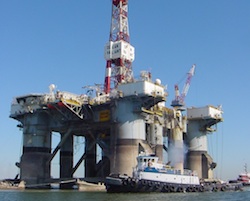
I look back to the Ocean Ranger
lost in 1982. Below is a summary of the event.
The Ocean Ranger was a an extremely large and relatively
well found semi-submersible which in the spring of 1982 was
drilling for Mobil on the Grand Banks off the coast of
Newfoundland. It had eight columns. The corner columns from
which the moorings were deployed were larger than the
intermediate columns. Importantly to the enquiry, each of
the columns contained three chain lockers which would be
empty when the rig was moored, the rig being provided with a
chain/wire mooring system. When on location all the chain
would be on the seabed, and the wire would be connected to
it. Also key to the events which followed, the Ballast
Control Room was situated in the aftermost intermediate
column on the starboard side, below the level of the main
deck.
It was a marine event, caused by a combination of poor
design, bad practice and lack of knowledge. One of the many
failings detailed by the enquiry was the curious diversity
of responsibility for the rig. During the enquiry a number
of former masters of the Ocean Ranger were interviewed and
they testified that they had responsibility for marine
matters without the authority to properly discharge their
duties. The masters had no crew directly under their control
and even the ballast control operators took their orders
from the Toolpusher. The report on the sinking stated that
he “had no knowledge of the ballasting system or the
principles of stability. And yet the ultimate authority and
responsibility for the safety of the rig and its crew rested
in his hands”.
The initiating event in the disaster was the weather, which
turned from unpleasant to apocalyptic over the days up to
15th February 1982. On the previous evening the wind speed
was about 70 knots and the rig was heaving alarmingly. Other
rigs in the area, the Sedco 706 and the Zapata Ugland were
both hit by large waves. The Sedco 706 was engulfed at about
1900 and the report says that the wave dislodged a small
shed which was welded to the deck in the area of the drill
floor, a point about 60 feet above the sea when the rig was
at operating draft. The Zapata Ugland was also struck by a
large wave which washed over the helideck.
On the Ocean Ranger a large wave broke the port glass and
flooded the ballast control room, dousing the ballast
control board. As a result valves in the pontoons started to
open and close randomly, to the distress of the control room
operators. They knew that they had a problem but they did
not know how to solve it. Like many ballast control systems,
the one on the Ocean Ranger was provided with solenoids
which changed the electrical power into hydraulic power. A
switch on the board would activate the solenoid which would
open or close to allow hydraulic pressure to be exerted on
the valve actuator, or to be removed, usually allowing the
valve to close. Realising that they had to do something,
some-one inserted a set of brass rods into the solenoids,
apparently thinking that the valves would be closed, but
instead the valves were opened. This allowed water to flow
freely between the tanks, and since the ballast tanks in the
Ocean Ranger were distributed along the lengths of the
pontoons all the water ran from aft to forward. The rig
gradually trimmed by the head until the chain lockers filled
up and there-after, in the dark at three in the morning, on
16th February the rig disappeared from the radar screens of
the ships in the area.
At five past one on the day of the disaster, only two hours
before the sinking, the Mobil foreman requested that the
Seaforth Highlander (The rig’s standby vessel) come to close
standby. It was six miles away. In 60 foot waves one should
remember that any movement of a ship in a specific
direction, rather than just maintaining a heading which will
reduce the possibility of structural damage, is something of
a feat.
The report states that during the approach to the rig the
Seaforth Highlander made ready the equipment it had
available which might assist in the rescue. This,
pathetically, consisted of a cargo net, a grappling hook, a
boat hook and two heaving lines and two lifebuoys fitted
with lines.
There was some inconsistency in the evidence from those
directly involved as to what happened next, but the enquiry
decided that the master of the Seaforth Highlander saw a
flare at about 2.14 as the ship was approaching the rig, and
that this flare had been fired from a lifeboat.
At 2.21 the Seaforth Highlander reported the sighting of
another flare, had seen the lifeboat and was proceeding
towards it. The Seaforth Highlander approached the lifeboat
and decided to place the ship stern to wind with the
lifeboat astern of the ship. In this way he would be able to
maintain the heading, and would not be at risk of running
the lifeboat down; a possibility if he had tried to carry
out the rescue head to wind. The witnesses said that the
lifeboat was also head to wind apparently under power. The
Seaforth Highlander now stern to the seas was manoeuvred
closer to the craft and the seas breaking over the after
deck were freezing instantly and making it difficult for the
crew to do anything useful in their less than adequate
protective clothing.
Just after 2.30 the Seaforth Highlander reported that the
lifeboat was alongside. The crew on the deck managed to
throw lines which the survivors in the lifeboat managed to
attach, and at this time a number of men emerged onto the
port side. It seems reasonable to assume that others had
undone their safety belts, and had stood up, and obviously
the bailing activities which had been going, on now ceased.
These changes probably contributed to a loss of stability
and as a result the lifeboat rolled slowly over throwing a
number of men into the sea. The overturned lifeboat was
close to the port side of the ship, and to reduce the
possibility of injury to those now in the sea the captain
stopped the port engine. As a result the ship began to drift
away from those in the water, although the deck crew made
valiant attempts to recover them, with some considerable
risk to themselves since the seas were still breaking over
the deck.
Meanwhile the standby vessels from the Sedco 706 and the
Zapata Ugland arrived. The Boltentor was asked to assist in
the recovery of the lifeboat, and the Nordertor was sent to
monitor the rig itself, the Nordertor reporting the loss of
the radar echo of the rig at three o’clock. There-after all
three vessels took up the task of searching for survivors or
bodies in the sea, but the report of the enquiry notes that
“sea conditions and inadequate retrieval equipment
frustrated all efforts to recover bodies”.
During the final but unsuccessful attempts to recover the
lifeboat the captain of the Nordertor observed that there
were about twenty bodies inside. Several floated out through
a hole in the bow, and one was washed onto the deck of the
ship. Over the following days the search continued for
bodies, the fleet now enhanced by a number of other vessels,
and by 20th February a total of 22 bodies had been
recovered.
This account is distressing to read thirty years on, but
what might have been achieved had the rig been the subject
of a safety case and its related risk assessments?
If a bowtie risk assessment had been used which involved the
Masters and the CROs we might have become aware of the
problems relating to the management of the rig and with the
failures of the remote draught reading system, which had
resulted in the need to read the draughts by opening the
port in the column of the rig.
If the technical details had been completed in a responsible
manner it is just possible that the means by which all the
valves could be opened or closed would have been identified,
and it would definitely have been recommended that a switch
should be fitted which would isolate the ballast control
board. It is possible to say this because all
semi-submersible risk assessments carried out in UK
recommended the installation of an isolation switch if not
already fitted. This was for the very reason that the board
might on occasion initiate spurious valve operations.
It is also possible that during the Compartment Study the
risk assessors would have identified the port in the control
room as a possible source of flooding and have suggested
that the deadlight (for non mariners a plate fitted over the
port to prevent the ingress of water in the event of the
glass being broken) be put in place as part of the
preparation for adverse weather.
In addition a proper level of research into the evacuation
processes might have identified the problems with the
availability of helicopters, and might have ensured that a
Mayday was broadcast earlier, and that the standby vessels
were more suitable for the task and better equipped.
Of course these possible improvements would depend on the
company acting on the recommendations. What actually
happened was that the Canadian legislators proscriptively
made rules for the operation of offshore installations in
Canadian waters.
Whatever else, the judge who conducted the investigation
into the loss of the Ocean Ranger contributed some succinct
phrases which to my mind encapsulate what we should all be
doing to keep our guys alive out there. These phrases are:
THE OCEAN RANGER DISASTER COULD HAVE BEEN AVOIDED BY
RELATIVELY MINOR MODIFICATIONS TO THE RIG AND ITS SYSTEMS
AND IT SHOULD, IN ANY EVENT, HAVE BEEN PREVENTED BY
COMPETENT AND INFORMED ACTION BY THOSE ON BOARD.
And
IT IS THE ESSENCE OF GOOD DESIGN TO REDUCE THE POSSIBILITY
OF HUMAN ERROR AND OF GOOD MANAGEMENT TO ENSURE THAT
EMPLOYEES RECEIVE TRAINING ADEQUATE TO THEIR
RESPONSIBILITIES.
TO
RETURN TO FEATURES INDEX CLICK HERE |