xxxxxxxxxxxxxxxxxx

SUMMARIES OF MAJOR ACCIDENT
REPORTS
(In event order)
|
|
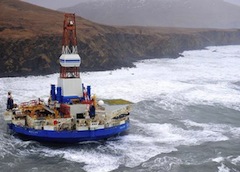
| THE KULLUK INCIDENT December 2012 |
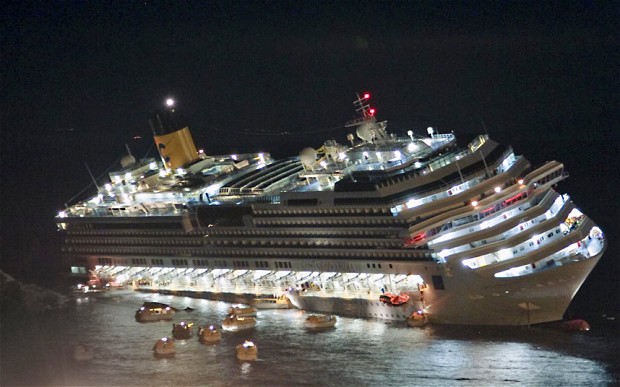 |
| THE COSTA CONCORDIA January 2012 |
 |
| THE TRINITY II September 2011 |
 |
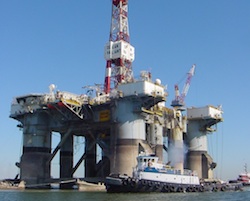
| THE DEEPWATER HORIZON April 2010 |
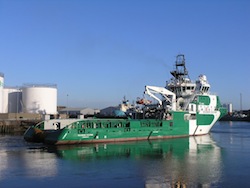 |
| THE BOURBON DOLPHIN April 2007 |
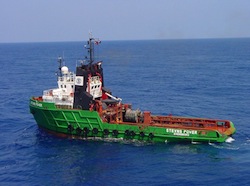 |
| THE STEVNS POWER October 2003 |
 |
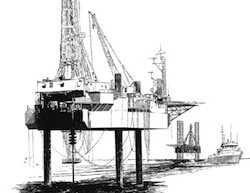
| THE OCEAN RANGER February 1982 |
 |
| THE OCEAN EXPRESS April 1976 |
PICTURE OF THE DAY
PIC OF THE DAY ARCHIVES
2007 - 77
Photographs
2008 - 101
Photographs
2009 - 124
Photographs
2010 - 118
Photographs
2011 - 100
Photographs
2012 - 97 Photographs
|
|

|
SOMETHING MORE ABOUT PFEER Stimulated by the fact that if you type PFEER into google you will find yourself on the MMASS site, where PFEER is mentioned once in an article I wrote some years ago, I have decided to write a few more words on the topic. The PFEER Regulations, together with the Design and Construction Regulations (DCR) make up what to most is probably a rather obscure area of the UK offshore legislation – that is, even more obscure than the Safety Case Regulations. The results of these different bits of legislation are the PFEER Assessment and the Verification Scheme. It appears to outsiders that the intent of the PFEER (Prevention of Fire and Explosion and Emergency Response) Regulations was to capture the bits of the former regulations which determined things such as the number of lifeboats, and the presence of a standby vessel, but which had been lost at the inception of the Safety Case Regs and the arrival of goal setting standards.
For
instance, it is possible using QRA to prove that lifeboats are unnecessary due
to the low risk of an event which would result in their use – so enter the
PFEER regs which do not depend on the formal calculation but just whether an
accident is ”forseeable”, and so on. And by the way the word
”foreseeable” is a key to the presence offshore of the standby vessel. And
as an aside those who have forgotten all about Jigsaw should be reminded that
the offshore trials of the BP SAR helicopter have started. Look elsewhere on
this site for more about Jigsaw and what it means to the industry, but meanwhile
back to PFEER before we also lapse into a coma! Regulation 4 of the PFEER Regulations
requires that: a.
protecting persons on the Installation from fire and explosion; and b.
securing effective emergency response. The
guidance to the regulation states that “protecting persons from fire and
explosion” covers all the measures that may be needed to safeguard people from
fire and explosions, i.e. inherent safety by design, preventive, detection,
control and mitigation measures.
In this context “measures”
include plant and management systems.
The ACOP to regulation 4 provides
some explanation of the purpose of the regulations. It says that the purpose of
the regulations overall is to promote a risk based systematic approach to
managing fire and explosion hazards and emergency response.
This is achieved by developing an
approach to fire and explosion hazard management based on hazard identification
and risk assessment, and involving a balanced and integrated approach to
designing hazards out, preventing hazards occurring, detecting they have
occurred or are occurring, controlling their escalation and mitigating their
consequences.
In addition a systematic approach to
emergency response is required by considering the various stages of an emergency
and how each of those stages can be most effectively managed. Regulation 8 requires “the Duty Holder to prepare and emergency response plan which documents the organisation and arrangments for dealing with an emergency on the Installation. It requires the Duty Holder to consult with those who may become involved in emergency response”. Paragraph 84 of the ACOP to the regulation states that: “The plan should cover the arrangements and procedures needed to respond to all reasonably foreseeable emergencies, ie it should set out who does what, when, where, how and to what effect in the event of an emergency. It should describe both the offshore and onshore arrangements and ensure that they dovetail. It should reflect the arrangements made under Regulation 6 (Preparation for emergencies), and should cover all stages of the emergency from the time it is detected until the time that it is over. The plan should indicate the point at which it should be initiated, and give guidance on the factors to consider in choosing particular courses of action, including the choice of external evacuation, rescue and recovery services in specific circumstances. It should be concise, readable, and in a format which can be used readily in real emergencies, as well as in training exercise and drills.” Regulation 17 covers the arrangements for recovery and rescue of persons subsequent to evacuation or escape from the Installation, rescue of persons near the Installation and the taking of all such persons to a place of safety. The guidance for this regulation effectively adds to the list of major accidents requiring to be addressed specifically: i) A person falling from the Installation during overside working. ii) A helicopter ditching in the sea on take-off or landing.
Those
carrying out a PFEER Assessment require a list of major accidents which might
result in explosion for or escape or evacuation, and it is possible to use the
safety case risk assessment or to do a new one.
When
carrying out the assessment it can be seen that marine events often do not
result in evacuation and may not result in fire or explosion but it may be a
good idea to include them in the assessment for completeness particularly if
there is to be an association between the PFEER Assessment and the Verification
Scheme.
Having
carried out the PFEER Assessment it is necessary to have a written scheme and a
set of performance standards for systems which will prevent, detect or mitigate
fires and explosions and which provide the means of evacuation. But you may be
lost by now…..
The
Design and Construction Regulations requires that a Verification Scheme be put
in place which will provide performance standards for Safety Critical Elements
– SCEs, and many companies have combined the Written Scheme and the
Verification Scheme into a Combined Scheme!! Such a scheme goes a bit further
than the DCR which requires that the installation systems which are safety
critical should be identified, it will require that appropriate systems should
be put in place if they are not there already and then provided with performance
standards.
Indeed
it seems likely that the PFEER Regs were written by those with experience of
risk and the Design and Construction Regulations by those with experience of
machinery, and really the two are hardly compatible.
So
– have these words helped anyone learn a bit more about PFEER. Maybe a little,
but of course more questions are raised. How do we write performance standards?
How do we subsequently measure the performance of the systems against the
standards?
If
you don’t know then watch this space. Vic Gibson |