 |
| HOME |
_small.jpg) |
| PICTURE OF THE DAY |
 |
| NORTH EUROPEAN SHIPS |
.JPG) |
| SOUTH ATLANTIC AND CARRIBEAN |
 |
| INDIA AND INDIAN OCEAN |
 |
| NORTH AMERICAN SHIPS |
 |
| FAR EAST AND AUSTRALIA |
 |
| MEDITERRANEAN AND MIDDLE EAST |
 |
| ARTICLES AND FEATURES |
 |
| NEWS AND VIEWS |
  |
| PUBLICATIONS |
 |
| WEBCAM |
|
| TYPE: VS 4612 | NAME: Toisa Defiant | PHOTO: Mike Prendergast, James Dodds | |||
|
|
.JPG) |
||||
|
GENERAL |
PROPULSION |
EQUIPMENT |
|||
| Length OA | 69.6 m | Engines | 2 x Wartsila W9L32 | Workdrum pull | 310 t |
| Breadth | 17.0 m | BHP | 12000 bhp | Capacity 1 | 5000m x 76mm |
| DWT | 2298 t | kW | 9000 kW | Capacity 2 | 2100m x 76mm |
| Deck area | 483 m2 | For'd Thruster | 2 x 619 kW | Towdrum pull | 350 t |
| Fuel | 746 m3 | Az Thruster | Capacity 1 | 1500m x 76mm | |
| Pot water | 467 m3 | Aft Thrusters | 1 x 610 kW | Capacity 2 | |
| Mud | 563 m3 | Bollard pull | 151 t | Sharks Jaw | 2 x Karmfork |
| Brine | 617 m3 | DP | DP1 | Cranes | 5t x 15m |
| Dry bulk | 228 m3 | Joystick | Yes | Tank cleaning | |
| Year built/due | 2006 | Shipyard | Wuchang | ||
| Previous names | |||||
| Comments | |||||

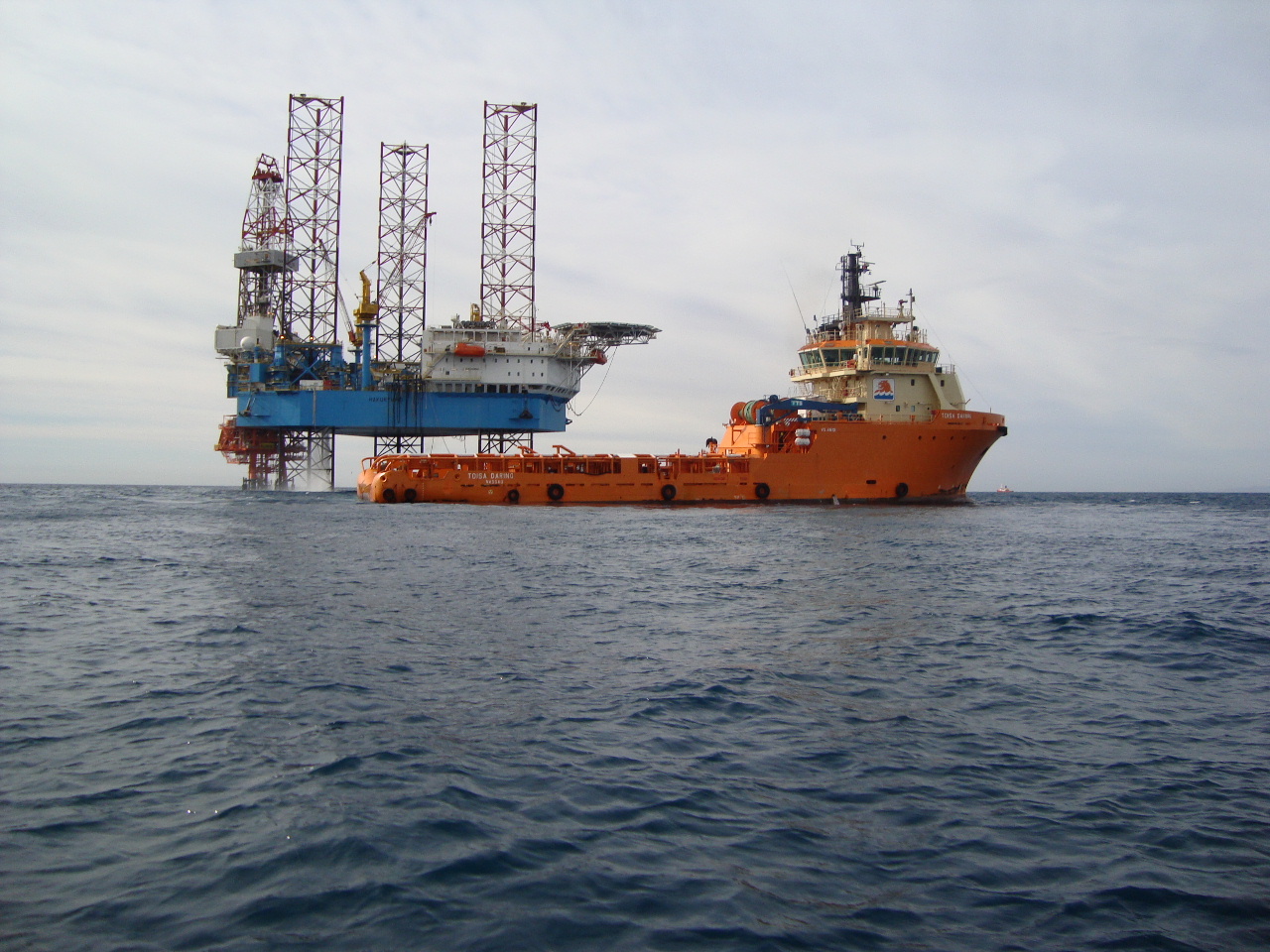
| TYPE: VS 4612 | NAME: Toisa Daring | PHOTO: Alan Marwick | |||
 |
|||||
|
GENERAL |
PROPULSION |
EQUIPMENT |
|||
| Length OA | 69.6 m | Engines | 2 x Wartsila W9L32 | Workdrum pull | 310 t |
| Breadth | 17.0 m | BHP | 12000 bhp | Capacity 1 | 5000m x 76mm |
| DWT | 2298 t | kW | 9000 kW | Capacity 2 | 2100m x 76mm |
| Deck area | 483 m2 | For'd Thruster | 2 x 619 kW | Towdrum pull | 350 t |
| Fuel | 746 m3 | Az Thruster | Capacity 1 | 1500m x 76mm | |
| Pot water | 467 m3 | Aft Thrusters | 1 x 610 kW | Capacity 2 | |
| Mud | 563 m3 | Bollard pull | 151 t | Sharks Jaw | 2 x Karmfork |
| Brine | 617 m3 | DP | DP1 | Cranes | 5t x 15m |
| Dry bulk | 228 m3 | Joystick | Yes | Tank cleaning | |
| Year built/due | 2007 | Shipyard | Wuchang | ||
| Previous names | |||||
| Comments | |||||
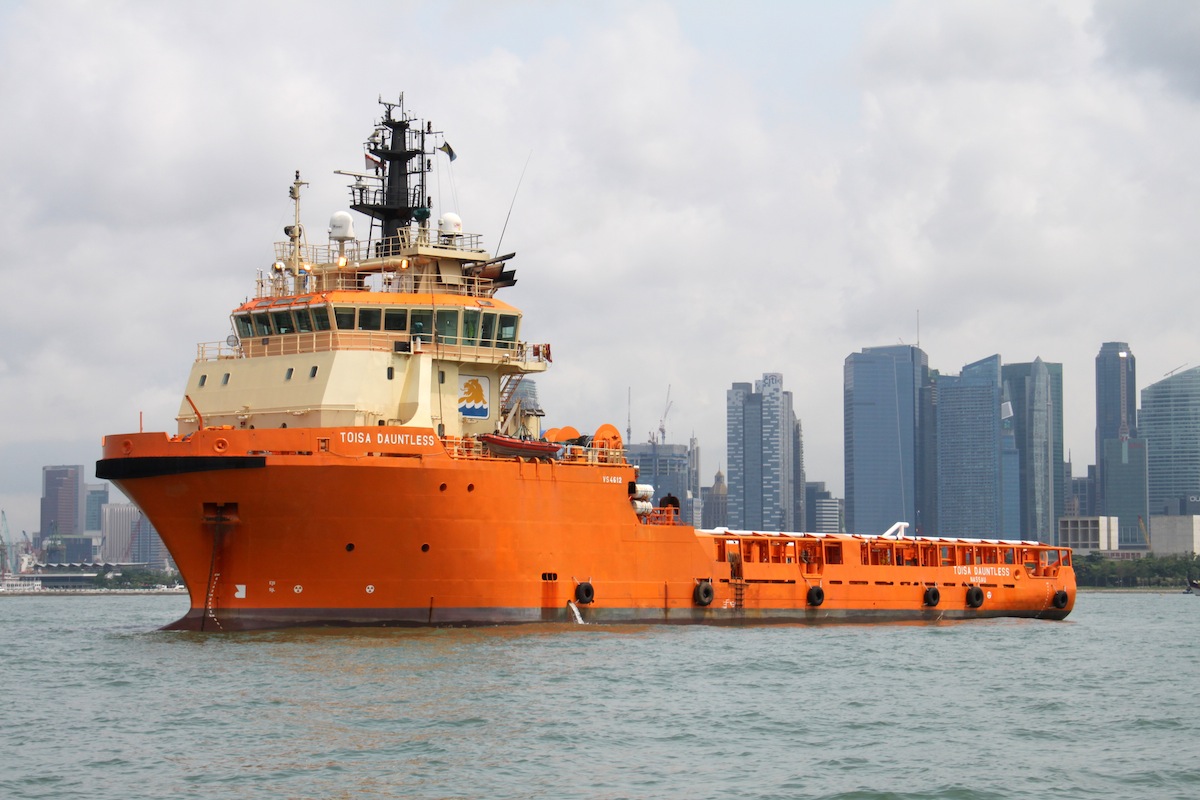
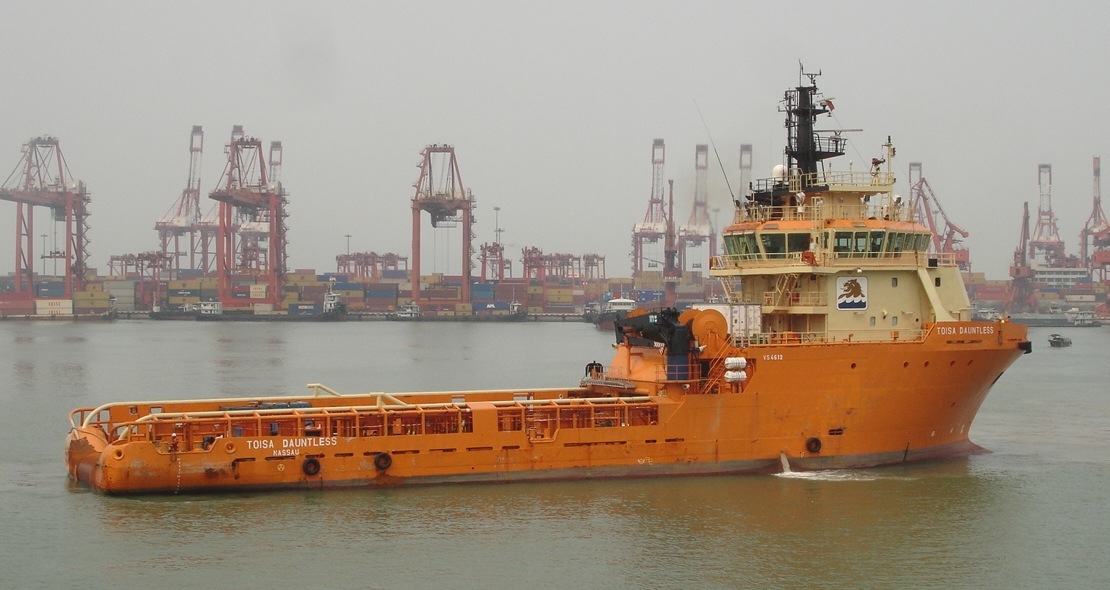
| TYPE: VS 4612 | NAME: Toisa Dauntless | PHOTO: Mike Prendergast, Ian Mathieson | |||
|
|
|
||||
|
GENERAL |
PROPULSION |
EQUIPMENT |
|||
| Length OA | 69.6 m | Engines | 2 x Wartsila W9L32 | Workdrum pull | 310 t |
| Breadth | 17.0 m | BHP | 12000 bhp | Capacity 1 | 5000m x 76mm |
| DWT | 2298 t | kW | 9000 kW | Capacity 2 | 2100m x 76mm |
| Deck area | 483 m2 | For'd Thruster | 2 x 619 kW | Towdrum pull | 350 t |
| Fuel | 746 m3 | Az Thruster | Capacity 1 | 1500m x 76mm | |
| Pot water | 467 m3 | Aft Thrusters | 1 x 610 kW | Capacity 2 | |
| Mud | 563 m3 | Bollard pull | 151 t | Sharks Jaw | 2 x Karmfork |
| Brine | 617 m3 | DP | DP1 | Cranes | 5t x 15m |
| Dry bulk | 228 m3 | Joystick | Yes | Tank cleaning | |
| Year built/due | 2006 | Shipyard | Wuchang | ||
| Previous names | |||||
| Comments | |||||
| TYPE: VS 4616 | NAME: Toisa Elan | PHOTO: - | |||
|
GENERAL |
PROPULSION |
EQUIPMENT |
|||
| Length OA | 83.0 m | Engines | 4 x Wartsila W9L32 | Workdrum pull | 400 t |
| Breadth | 22.0 m | BHP | 24000 | Capacity 1 | 2318m x 90mm |
| DWT | 4427 mt | kW | 18000 | Capacity 2 | 3785m x 90mm |
| Deck area | 768 m2 | For'd Thruster | 2 x 1200 kW | Towdrum pull | 400 t |
| Fuel | 1200 m3 | Az Thruster | - | Capacity 1 | 1500m x 90mm |
| Pot water | 997 m3 | Aft Thrusters | 2 x 830 kW | Capacity 2 | - |
| Mud | 891 m3 | Bollard pull | 219 mt | Sharks Jaw | 4 x Karmforks |
| Brine | 1163 m3 | DPII | Kongsberg Kpos | Cranes | - |
| Dry bulk | 11000 cu.ft | Joystick | - | Tank cleaning | - |
| Year built | 2012 | Shipyard | Wuchang | Berths | 25 |
| Previous names | - | ||||
| Comments | - | ||||
| TYPE: VS 4616 | NAME: Toisa Envoy | PHOTO: - | |||
|
GENERAL |
PROPULSION |
EQUIPMENT |
|||
| Length OA | 83.0 m | Engines | 4 x Wartsila W9L32 | Workdrum pull | 400 t |
| Breadth | 22.0 m | BHP | 24000 | Capacity 1 | 2318m x 90mm |
| DWT | 4427 mt | kW | 18000 | Capacity 2 | 3785m x 90mm |
| Deck area | 768 m2 | For'd Thruster | 2 x 1200 kW | Towdrum pull | 400 t |
| Fuel | 1200 m3 | Az Thruster | - | Capacity 1 | 1500m x 90mm |
| Pot water | 997 m3 | Aft Thrusters | 2 x 830 kW | Capacity 2 | - |
| Mud | 891 m3 | Bollard pull | 219 mt | Sharks Jaw | 4 x Karmforks |
| Brine | 1163 m3 | DPII | Kongsberg Kpos | Cranes | - |
| Dry bulk | 11000 cu.ft | Joystick | - | Tank cleaning | - |
| Year built | 2013 | Shipyard | Wuchang | Berths | 25 |
| Previous names | - | ||||
| Comments | - | ||||
| TYPE: VS 4616 | NAME: Toisa Explorer | PHOTO: - | |||
|
GENERAL |
PROPULSION |
EQUIPMENT |
|||
| Length OA | 83.0 m | Engines | 4 x Wartsila W9L32 | Workdrum pull | 400 t |
| Breadth | 22.0 m | BHP | 24000 | Capacity 1 | 2318m x 90mm |
| DWT | 4427 mt | kW | 18000 | Capacity 2 | 3785m x 90mm |
| Deck area | 768 m2 | For'd Thruster | 2 x 1200 kW | Towdrum pull | 400 t |
| Fuel | 1200 m3 | Az Thruster | - | Capacity 1 | 1500m x 90mm |
| Pot water | 997 m3 | Aft Thrusters | 2 x 830 kW | Capacity 2 | - |
| Mud | 891 m3 | Bollard pull | 219 mt | Sharks Jaw | 4 x Karmforks |
| Brine | 1163 m3 | DPII | Kongsberg Kpos | Cranes | - |
| Dry bulk | 11000 cu.ft | Joystick | - | Tank cleaning | - |
| Year built | 2013 | Shipyard | Wuchang | Berths | 25 |
| Previous names | - | ||||
| Comments | - | ||||
| TYPE: | NAME: Toisa Perseus | PHOTO: George Craigen, Vic Gibson | |||
 |
 |
 |
|||
|
GENERAL |
PROPULSION |
EQUIPMENT |
|||
| Length OA | 113.57 m | Engines | 4 x Wartsila 9L26 | Workdrum pull | - |
| Breadth | 22 m | BHP | 14579 | Capacity 1 | - |
| DWT | 6300 t | kW | 10720 | Capacity 2 | - |
| Deck area | 1200 m2 | For'd Thruster | 3 x 1335 kW | Accomm berths | 98 |
| Fuel | 1300 m3 | Az Thruster | - | Storage capacity |
2 x carousels |
| Pot water | 460 m3 | Aft Az Props | 2 x 2200 kW | ROV | - |
| Mud | - | Bollard pull | - | Diving Capability | - |
| Brine | - | DP III | Simrad SDP 21 | Cranes | 1 x 150 t |
| Dry bulk | - | Joystick | - | Tank cleaning | - |
| Year built | 1998 | Shipyard | - | ||
| Previous names | - | ||||
| Comments | - | ||||
| TYPE: | NAME: Toisa Proteus | PHOTO: | |||
|
GENERAL |
PROPULSION |
EQUIPMENT |
|||
| Length OA | 131.7 m | Engines | 4 x Wartsila 9L26 | Workdrum pull | - |
| Breadth | 22 m | BHP | 14579 | Capacity 1 | - |
| DWT | 8710 t | kW | 10720 | Capacity 2 | - |
| Deck area | 1900 m2 | For'd Thruster | 3 x 1335 kW | Accomm berths | 160 |
| Fuel | 1155 m3 | Az Thruster | - | Storage capacity |
- |
| Pot water | 563 m3 | Aft Az Props | 2 x 3000 kW | ROV | - |
| Mud | - | Bollard pull | - | Diving Capability | 14 divers |
| Brine | - | DP III | Simrad SDP 21 | Cranes | 1 x 342 t |
| Dry bulk | - | Joystick | - | Tank cleaning | - |
| Year built | 2002 | Shipyard | Van de Geissen | ||
| Previous names | - | ||||
| Comments | - | ||||
| TYPE: | NAME: Toisa Pegasus | PHOTO: Martin Penwright | |||
 |
|||||
|
GENERAL |
PROPULSION |
EQUIPMENT |
|||
| Length OA | 133 m | Engines | 4 x MAN 9L27/38 | Workdrum pull | - |
| Breadth | 22 m | BHP | 14579 | Capacity 1 | - |
| DWT | 9300 t | kW | 10720 | Capacity 2 | - |
| Deck area | 1200 m2 | For'd Thruster | 2 x 1335 kW | Accomm berths | 199 |
| Fuel | 1200 m3 | Az Thruster | 1 x 1200 kW | Storage capacity |
- |
| Pot water | 460 m3 | Aft Az Props | 2 x 3000 kW | ROV | - |
| Mud | - | Bollard pull | - | Diving Capability | 18 divers |
| Brine | - | DP III | Simrad SDP 21 | Cranes | 1 x 342 t |
| Dry bulk | - | Joystick | - | Tank cleaning | - |
| Year built | 2008 | Shipyard | Van de Geissen | ||
| Previous names | - | ||||
| Comments | - | ||||
| TYPE: MT 6016L | NAME: Toisa Paladin | PHOTO: Mike Prendergast | |||
 |
|||||
|
GENERAL |
PROPULSION |
EQUIPMENT |
|||
| Length OA | 103.7 m | Engines | 5 x Cat 3516/3508 | Workdrum pull | - |
| Breadth | 19.7 m | BHP | 12660 | Capacity 1 | - |
| DWT | 4600 t | kW | 9310 | Capacity 2 | - |
| Deck area | 900 m2 | For'd Thruster | 2 x 1050 kW | Accomm berths | 100 |
| Fuel | 1320 m3 | Az Thruster | 1 x 883 kW | Storage capacity |
- |
| Pot water | 1330 m3 | Aft Az Props | 2 x 2200 kW | ROV | - |
| Mud | - | Bollard pull | - | Diving Capability | 18 divers |
| Brine | - | DP II | KPOS DP-21 | Cranes | 1 x 140 t |
| Dry bulk | - | Joystick | - | Tank cleaning | - |
| Year built | 2007 | Shipyard | Kleven | ||
| Previous names | - | ||||
| Comments | - | ||||
| TYPE: UT 736 | NAME: Toisa Pisces | PHOTO: Ron Jansen | |||
%20RJansen.JPG) |
|||||
|
GENERAL |
PROPULSION |
EQUIPMENT |
|||
| Length OA | 103.7 m | Engines | 3 x Bergen BRG9 | Workdrum pull | - |
| Breadth | 23.2 m | BHP | - | Capacity 1 | - |
| DWT | 6420 t | kW | 10875 | Capacity 2 | |
| Deck area | - m2 | For'd Thruster | 2 x 880 kW | Towdrum pull | |
| Fuel | 878 m3 | Az Thruster | 1 x 880 kW | Capacity 1 | |
| Pot water | 1439 m3 | Aft Azimuth | 2 x ? kW | Capacity 2 | |
| Cargo Oil | 3325 m3 | Bollard pull | - | Sharks Jaw | |
| Oily Water | 1415 m3 | DP II | Alstrom ADP 21 | Cranes | 1 x 23t 1 x 10t |
| Solids | 10 m3 | Joystick | Yes | Tank cleaning | |
| Year built/due | 1996 | Shipyard | Ulstein Verft | ||
| Previous names | Fresnel | ||||
| Comments | This vessel was originally a French cable ship, converted by Sealion against a contract for a well testing vessel for use in the Gulf of Mexico. | ||||
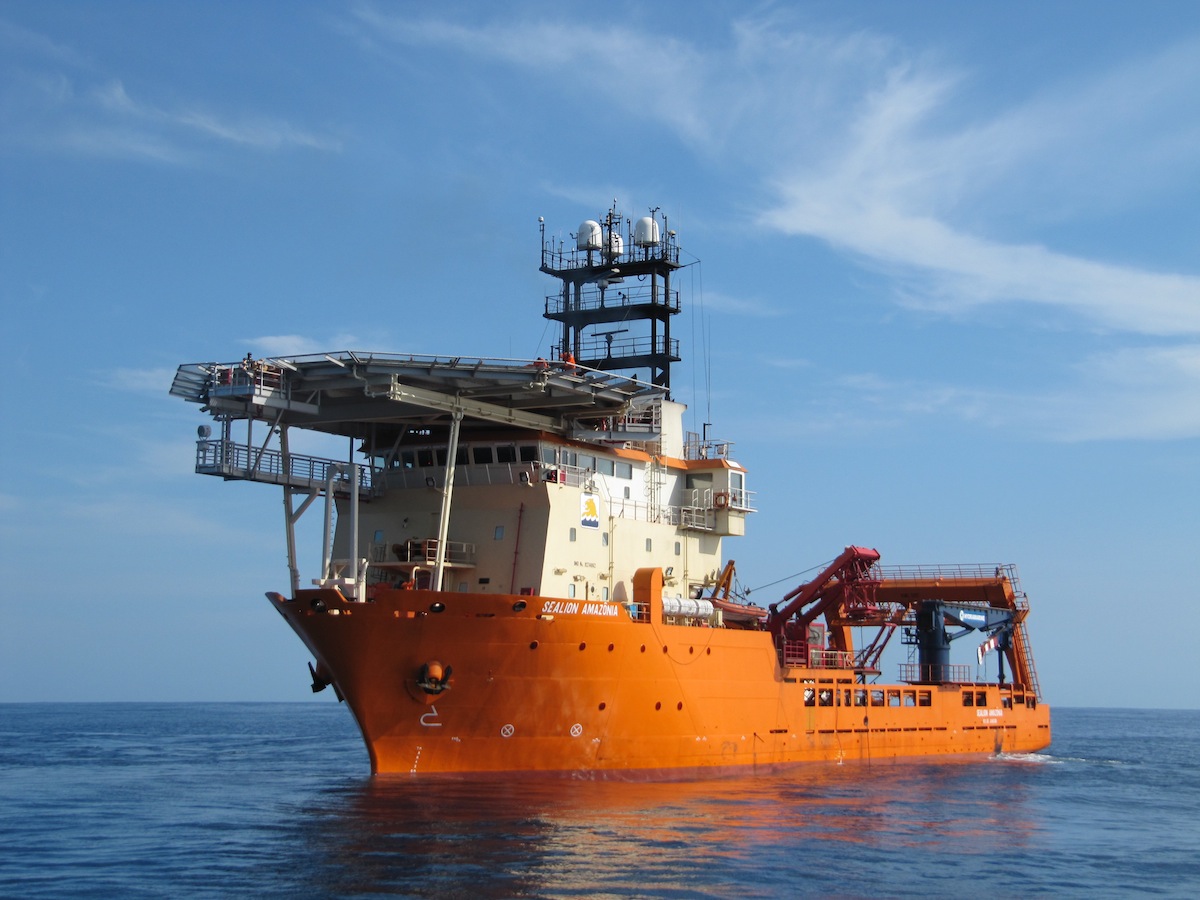
| TYPE: | NAME: Sealion Amazonia | PHOTO: Jan Plug, Tony Poll | |||
.JPG) |
.JPG) |
 |
|||
|
GENERAL |
PROPULSION |
EQUIPMENT |
|||
| Length OA | 73.8 m | Engines | 4 x MAK 8M20 | Workdrum pull | - |
| Breadth | 16.0 m | BHP | 6927 | Capacity 1 | - |
| DWT | 2922 | kW | 9090 | Capacity 2 | - |
| Deck area | 270 m2 | For'd Thruster | 2 x 800 kW | Accomm berths | 62 |
| Fuel | 900 m3 | Az Thruster | - | Storage capacity |
- |
| Pot water | 500 m3 | Aft Az Props | 2 x 1500 kW | ROV | - |
| Mud | - | Bollard pull | - | Diving Capability | - |
| Brine | - | DP II | Kongsberg SDP 21 | Cranes | 1 x 10 t |
| Dry bulk | - | Joystick | - | Tank cleaning | - |
| Year built | 2005 | Shipyard | Itajai | ||
| Previous names | - | ||||
| Comments | - | ||||
| TYPE: VS 483 Mk III | NAME: TOISA WARRIOR | PHOTO: | |||
| GENERAL | PROPULSION | CARGO CAPACITY | |||
| Length OA | 87.4 m | Engines | 2 x W6L32 | Fuel | 990 m3 |
| Breadth | 19.0 m | BHP/kW | 8160/6000 | Pot water | 1225 m3 |
| DWT | 4860 t |
For'd Thrusters |
2 x 830 kW | Mud | 946 m3 |
| Deck area | 928 m2 | Az Thruster | - | Base oil | 225 m3 |
| Year built | 2011 | Aft Thrusters | 2 x 830 kW | Brine | 849 m3 |
| Shipyard | Wuchang | Joystick | - | Dry bulk | 430 m3 |
| Berths | 60 | DPII | Kongsberg | Tank Cleaning | - |
| Previous names | - | ||||
| Comments | - | ||||
| TYPE: VS 483 Mk III | NAME: TOISA WAVE | PHOTO: Mike Prendergast | |||
 |
 |
||||
| GENERAL | PROPULSION | CARGO CAPACITY | |||
| Length OA | 87.4 m | Engines | 2 x W6L32 | Fuel | 990 m3 |
| Breadth | 19.0 m | BHP/kW | 8160/6000 | Pot water | 1225 m3 |
| DWT | 4860 t |
For'd Thrusters |
2 x 830 kW | Mud | 946 m3 |
| Deck area | 928 m2 | Az Thruster | - | Base oil | 225 m3 |
| Year built | 2011 | Aft Thrusters | 2 x 830 kW | Brine | 849 m3 |
| Shipyard | Wuchang | Joystick | - | Dry bulk | 430 m3 |
| Berths | 60 | DPII | Kongsberg | Tank Cleaning | - |
| Previous names | - | ||||
| Comments | - | ||||
| TYPE: SEALION C | NAME: Toisa Conqueror | PHOTO: George Craigen, Tony Poll | |||
 |
 |
 |
|||
| General | Propulsion | Cargo Capacity | |||
| Length OA | 73.8 m | Engines | Wartsila 6L26 | Fuel | 1007 m3 |
| Breadth | 16.05 m | BHP | 5228 | Pot water | 768 m3 |
| DWT | 3248 tonnes | For'd Thrusters | 2 x 800 bhp | Mud | 395 m3 |
| Deck area | 688.5 m2 | Az Thrusters | - | Base oil | 169 m3 |
| Aft Thrusters | 2 x 800 bhp | Brine | 425 m3 | ||
| Year built | 1999 | DP II | Kongsberg Simrad | Dry bulk | 217 m3 |
| Shipyard | Appledore | Joystick | Yes | Tank Cleaning | Marex |
| Previous names | - | ||||
| Comments | - | ||||
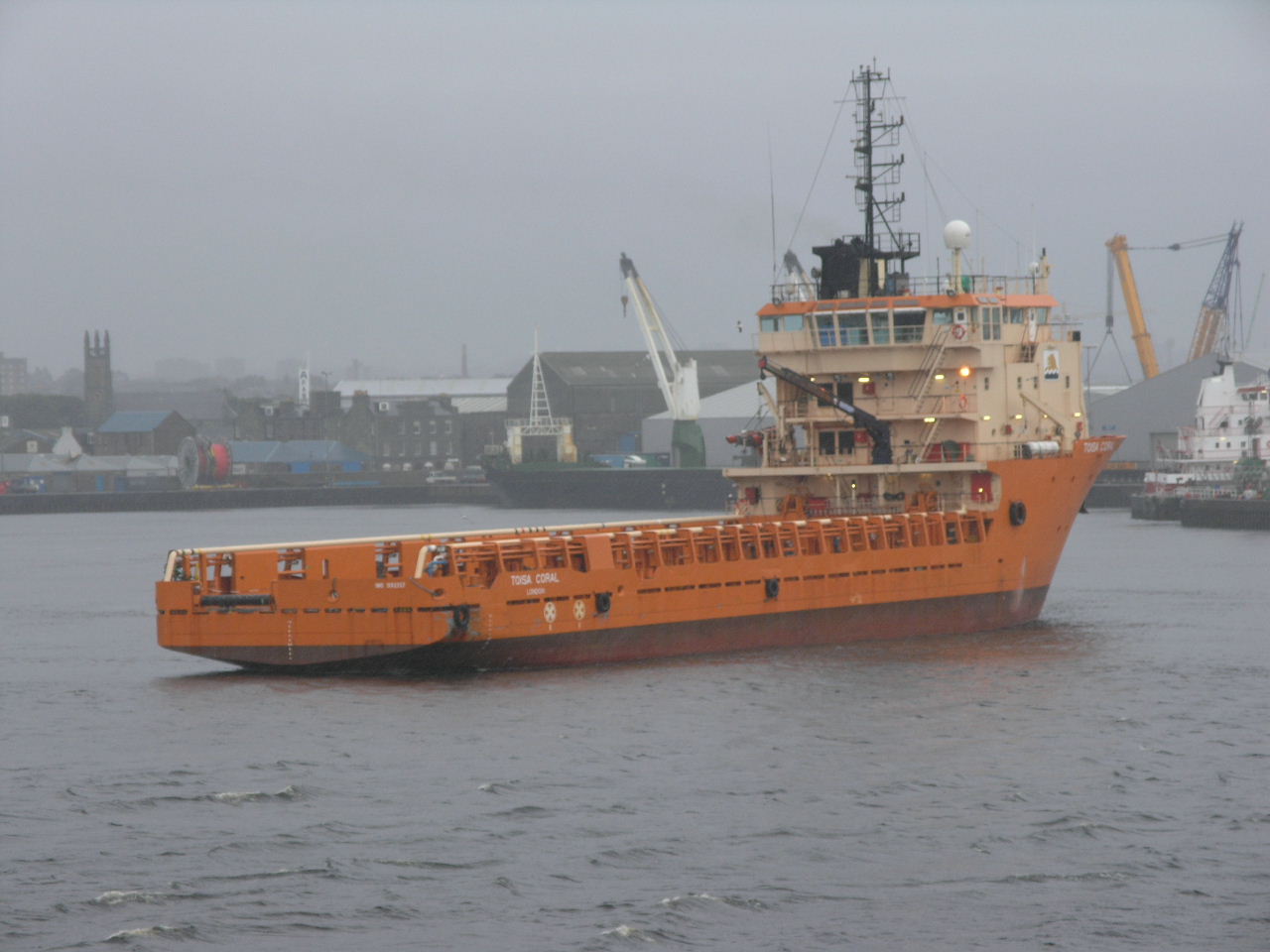
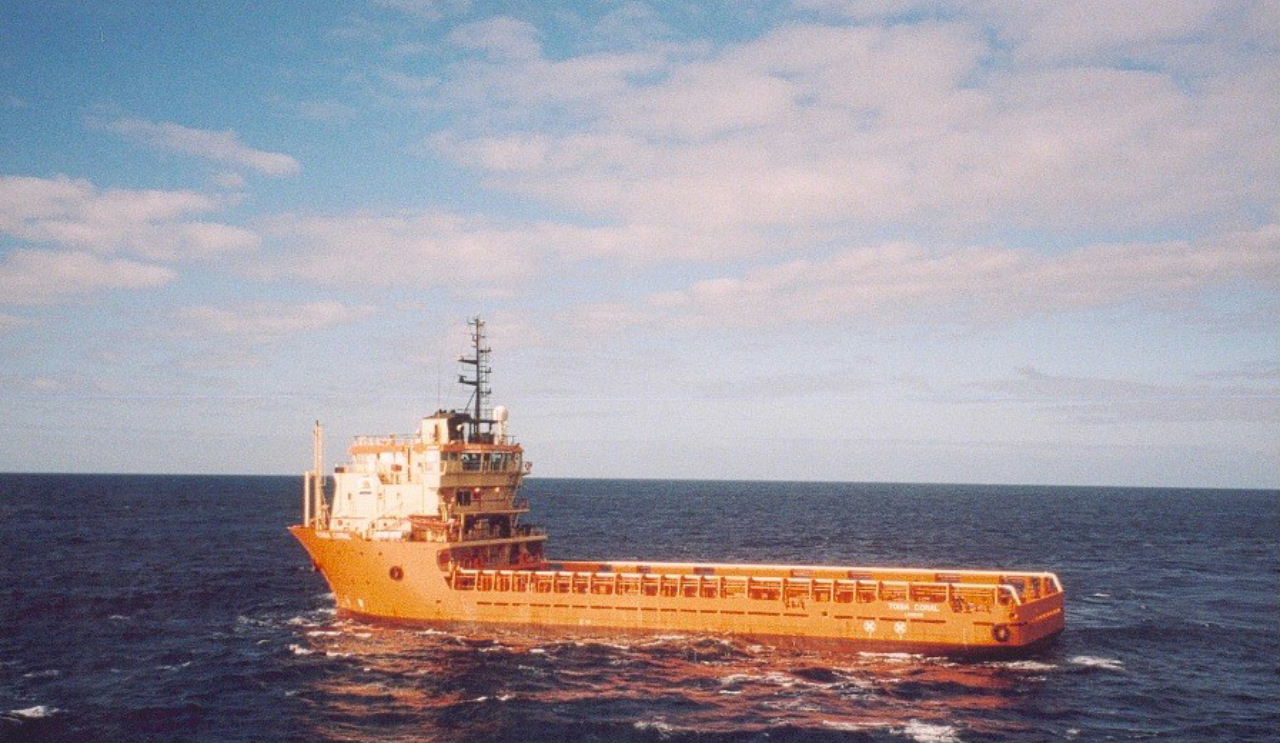
| TYPE: SEALION C | NAME: Toisa Coral | PHOTO: George Craigen, Torleif Klokset | |||
 |
 |
||||
| General | Propulsion | Cargo Capacity | |||
| Length OA | 73.8 m | Engines | Wartsila 6L26 | Fuel | 1007 m3 |
| Breadth | 16.05 m | BHP | 5228 | Pot water | 768 m3 |
| DWT | 3248 tonnes | For'd Thrusters | 2 x 800 bhp | Mud | 395 m3 |
| Deck area | 688.5 m2 | Az Thrusters | - | Base oil | 169 m3 |
| Aft Thrusters | 2 x 800 bhp | Brine | 425 m3 | ||
| Year built | 1999 | DP II | Kongsberg Simrad | Dry bulk | 217 m3 |
| Shipyard | Appledore | Joystick | Yes | Tank Cleaning | Marex |
| Previous names | - | ||||
| Comments | - | ||||
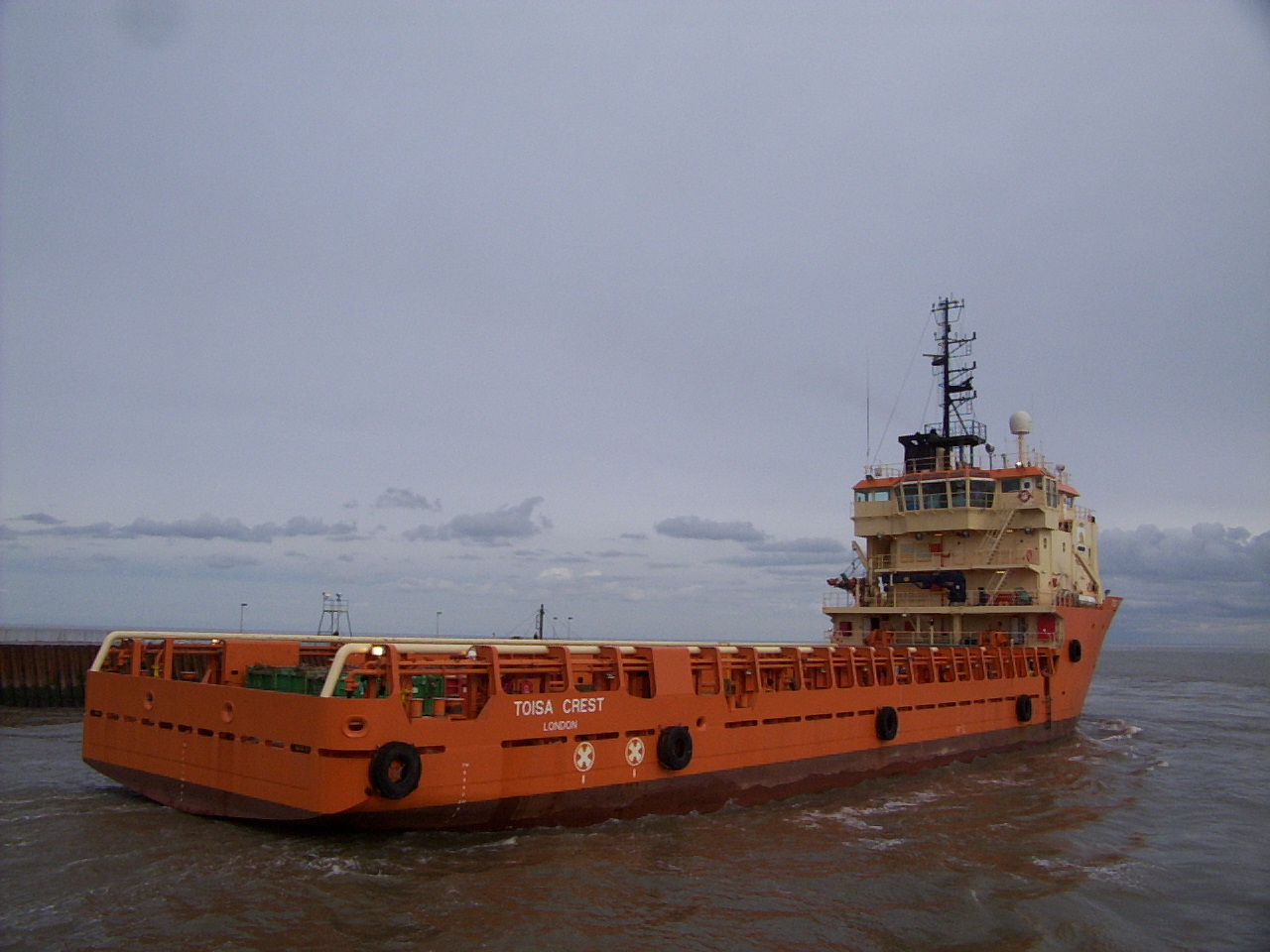
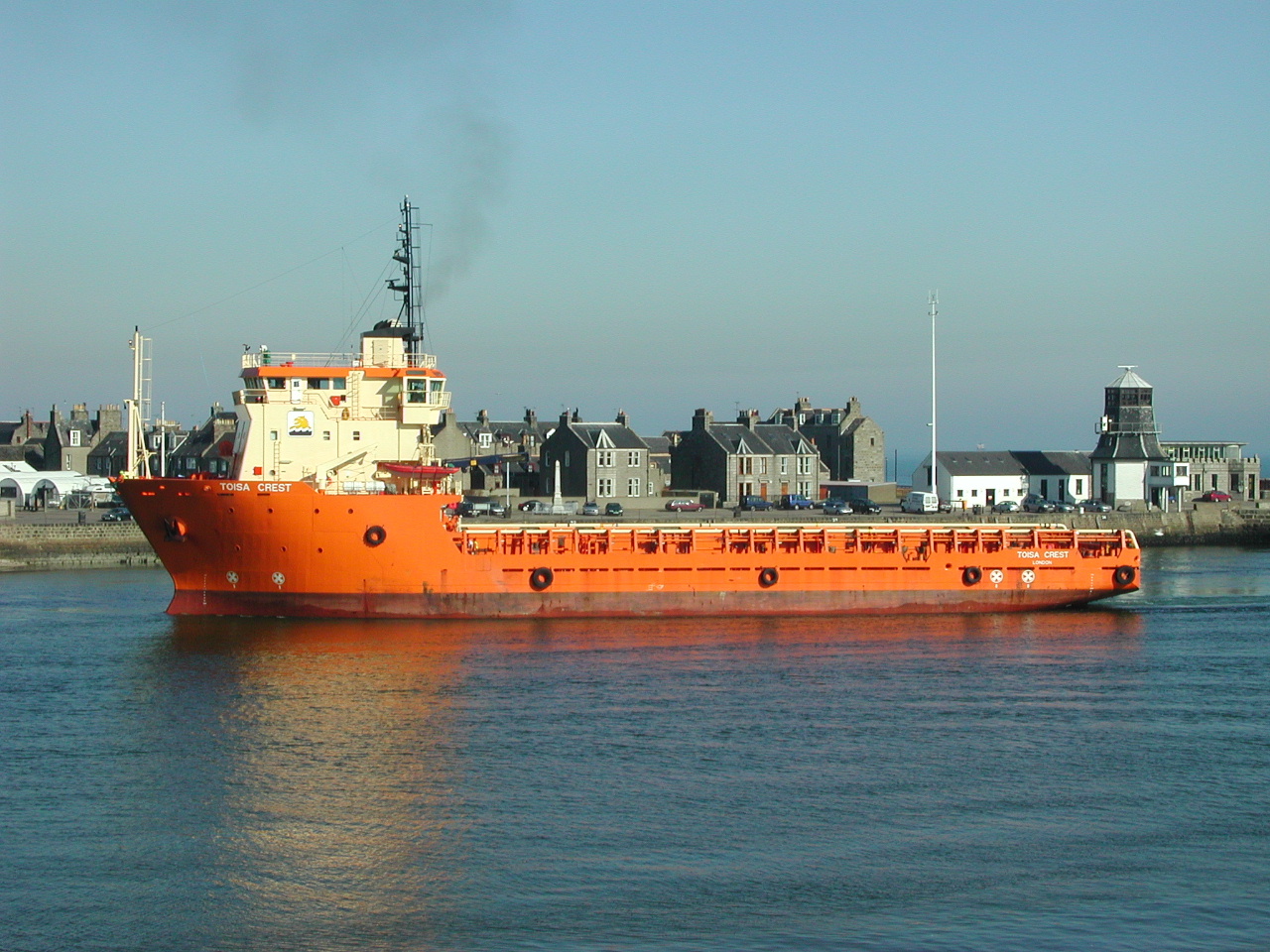
| TYPE: SEALION C | NAME: Toisa Crest | PHOTO: Vic Gibson, Peter Taylor | |||
 |
 |
 |
|||
| General | Propulsion | Cargo Capacity | |||
| Length OA | 73.8 m | Engines | Wartsila 6L26 | Fuel | 1007 m3 |
| Breadth | 16.05 m | BHP | 5228 | Pot water | 768 m3 |
| DWT | 3248 tonnes | For'd Thrusters | 2 x 800 bhp | Mud | 395 m3 |
| Deck area | 688.5 m2 | Az Thrusters | - | Base oil | 169 m3 |
| Aft Thrusters | 2 x 800 bhp | Brine | 425 m3 | ||
| Year built | 1999 | DP II | Kongsberg Simrad | Dry bulk | 217 m3 |
| Shipyard | Appledore | Joystick | Yes | Tank Cleaning | Marex |
| Previous names | - | ||||
| Comments |
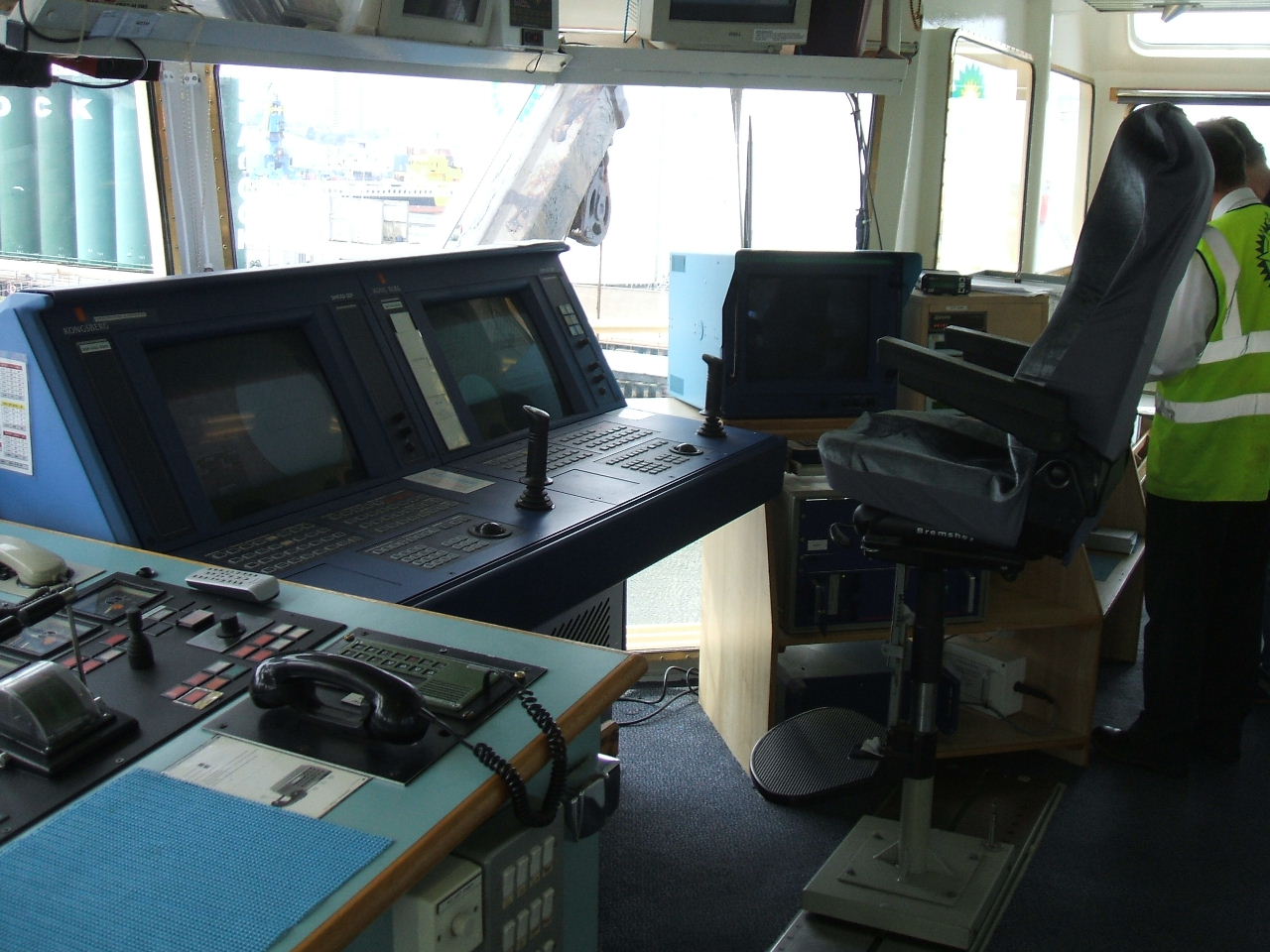
The Toisa Crest was named by Glenda Jackson earlier this year at Appledore Shipbuilders in North Devon. The naming was noteworthy for a variety of reasons, and it shows that America is not the only country to believe that former film actors make good politicians. For those unfamiliar with British politics Glenda Jackson, former film actor favoured by Ken Russell is now a cabinet minister favoured by Tony Blair. She is UK Shipping Minister. At the naming ceremony she said she was "pleased to be involved in the naming of this fine vessel and proud to say that Toisa Crest was not only built in Britain but has been registered under the British flag." Actually it was even more noteworthy than that. Toisa Crest and its sister ship Toisa Coral are the first supply vessels to be designed in Britain for a number of years and the first to be built by Appledore Shipbuilders since the Offshore Marine ships in the late sixties and early seventies. They are part of the fleet of 21 vessels owned by Gregory Callimanopulos, all of which are managed by Sealion Shipping Ltd of Farnham. The vessels were designed in house by Sealion and have a superficial resemblance to the UT755 in that they are provided with a single exhaust, which passes through the wheelhouse and becomes the funnel on the port side. They are designed as dual role supply/ROV support vessels and the Toisa Coral is already working for Cable and Wireless in the ROV support role in the Far East. To provide this service they have a full Class 2 Kongsberg Simrad SDP21 Dynamic Positioning system which can interface with 2 DGPS receivers and a HiPAP acoustic system. Transponders can be deployed from the specially designed A-frame permanently mounted on the bow. And in order to accommodate client personnel the ships have a total of 40 berths in single and double berth cabins. In addition the bridge is uniquely provided with a client operations room in a well on the starboard side. This facility allows the client personnel to work in close co-operation with the ship's bridge staff without getting in the way (our words, not theirs). Also to facilitate the change from supply to ROV operations the forward sections of the crash barriers and the bulwarks can easily be removed and the areas are then unobstructed by pipework, access hatches or vents. In addition if the client requirement is such a moonpool can be created by removing the deck and bottom plating from the base oil tank. The ships can also be fitted with a 17.5 meter helideck by judicious re-arrangement of the fittings on top of the wheelhouse. In their supply vessel role carrying capacities are what the industry has come to expect from modern platform ships 1000 cubic meters of fuel, 768 cubic meters of potable water and 681 cubic meters of drill water with compatible high pumping rates. They have four dedicated liquid mud tanks and four dedicated brine tanks which form the sides of the main underdeck cargo space. The tanks have corrugated transverse bulkheads and are externally framed fore and aft to minimise problems with residues and to ease cleaning. Main propulsion is by two 2614 bhp Wartsila diesels, total output in kilowatts being 3,900. As well as providing main power the engines drive two 1500 kW shaft generators which provide the power for the vessel's domestic and operational services and, crucially power for the four 590 kW tunnel thrusters; two forward and two aft. Claimed fuel consumption is 14 tonnes per day at 13 knots and a minimal 7 tonnes per day at an economical 10 knots. Glenda said at the naming ceremony "I believe that our efforts and those of the industry to promote once again the high standards of the British shipping industry have started to pay off." There is no doubt that the British marine industry would like to think that she is right. The Toisa Crest is certainly a good example of a well designed, well built and beautifully finished ship though in this case there is no doubt that all the credit lies with the Toisa, Sealion and Appledore Shipbuilders. This originally appeared in Offshore Support
Journal in 1999 |
||||
| type: GLOBAL 1000 | name: Toisa Independent | PHOTO: Vic Gibson | |||
 |
 |
 |
|||
| General | Propulsion | Cargo Capacity | |||
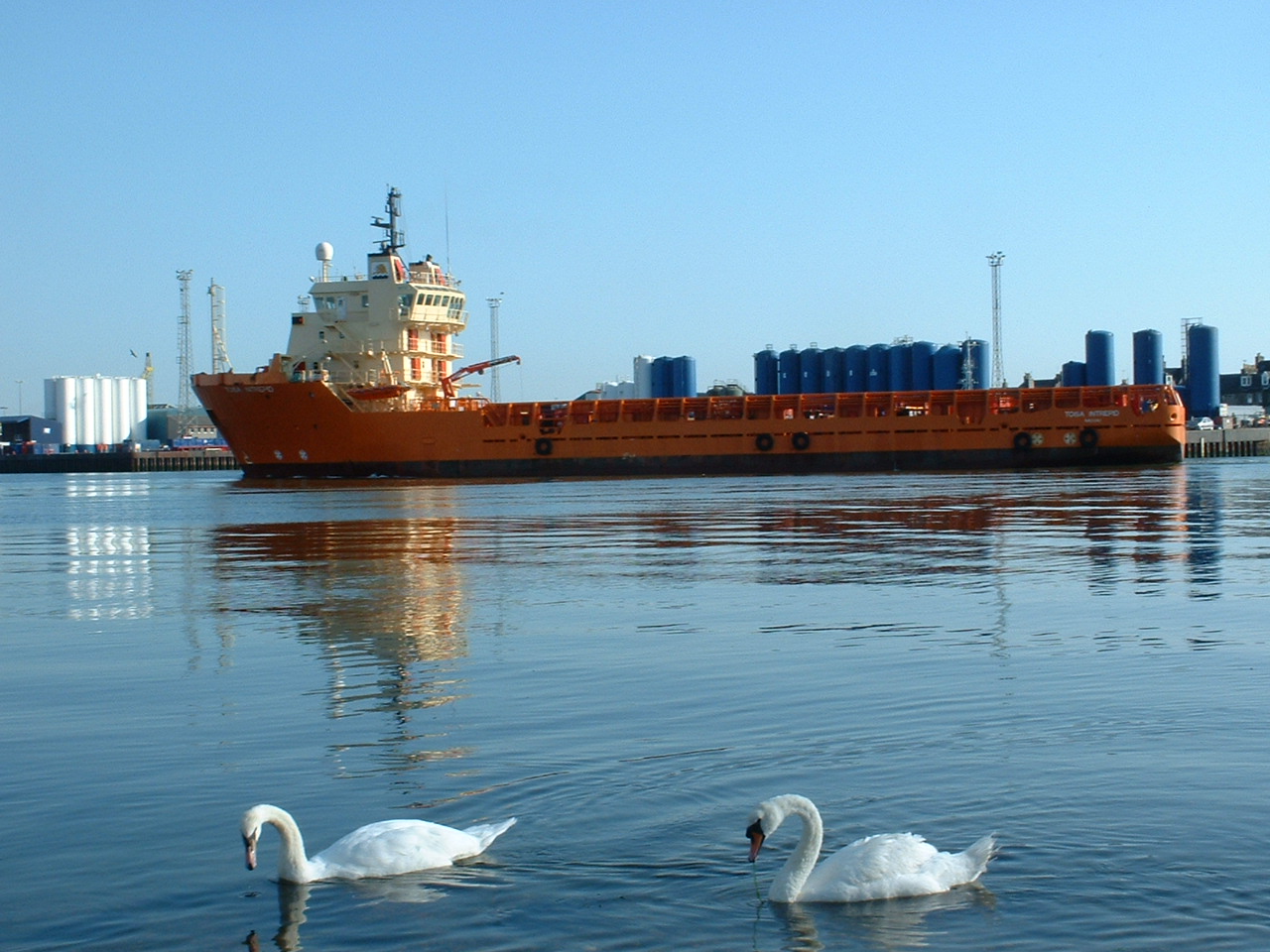
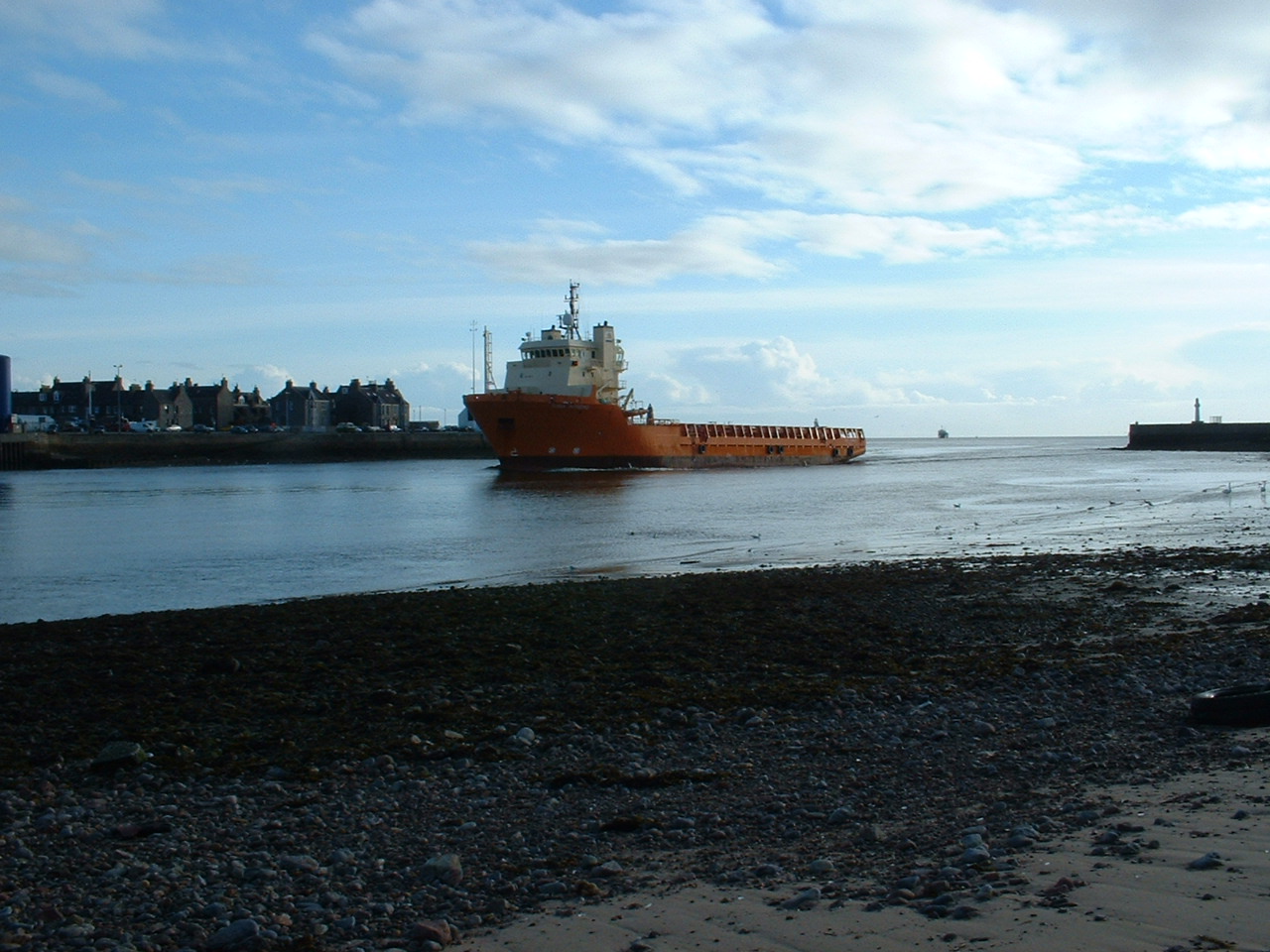
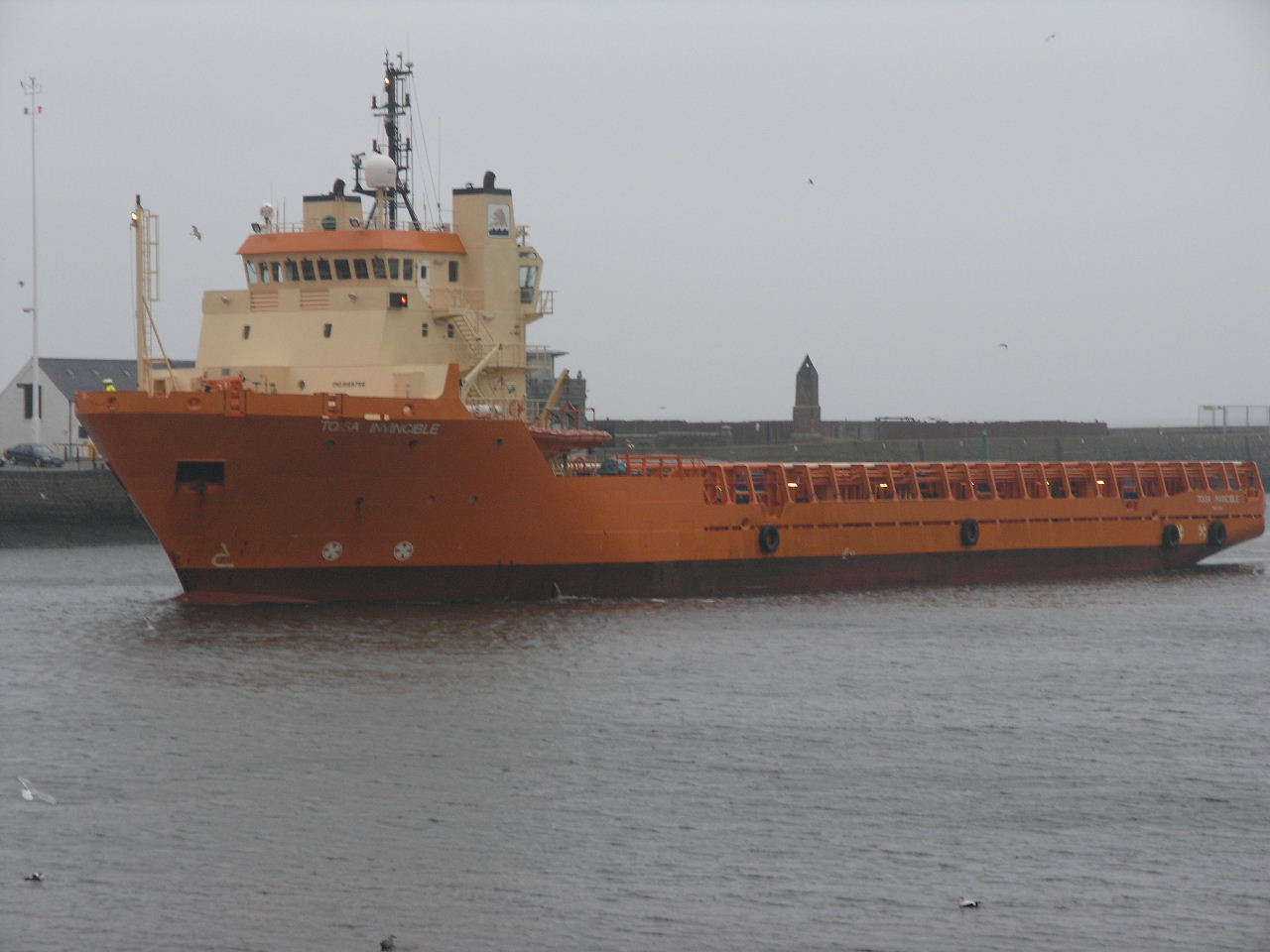
| Length OA | 83.3 m | Engines | MaK 6M25 | Fuel | 1000 m3 |
| Breadth | 19 m | BHP | 5900 | Pot water | 1000 m3 |
| DWT | 4250 t | For'd Thrusters | 2 x 735 kW | Mud | 600 m3 |
| Deck area | 1000 m2 | Az Thruster | - | Base oil | 200 m3 |
| Aft Thrusters | 2 x 2200 kW | Brine | 200 m3 | ||
| Year built | 2003 | DP 1 | Simrad SPD 01 | Dry bulk | 288 m3 |
| Shipyard | Appledore | Joystick | Yes | Tank Cleaning | MAREX |
| Previous names | - | ||||
| Comments | - | ||||
|
||||||||||||||||||||||||||||||||||||||||||||||||||||||||||||||||||||||||

|
||||||||||||||||||||||||||||||||||||||||||||||||||||||||||||||||||||||||


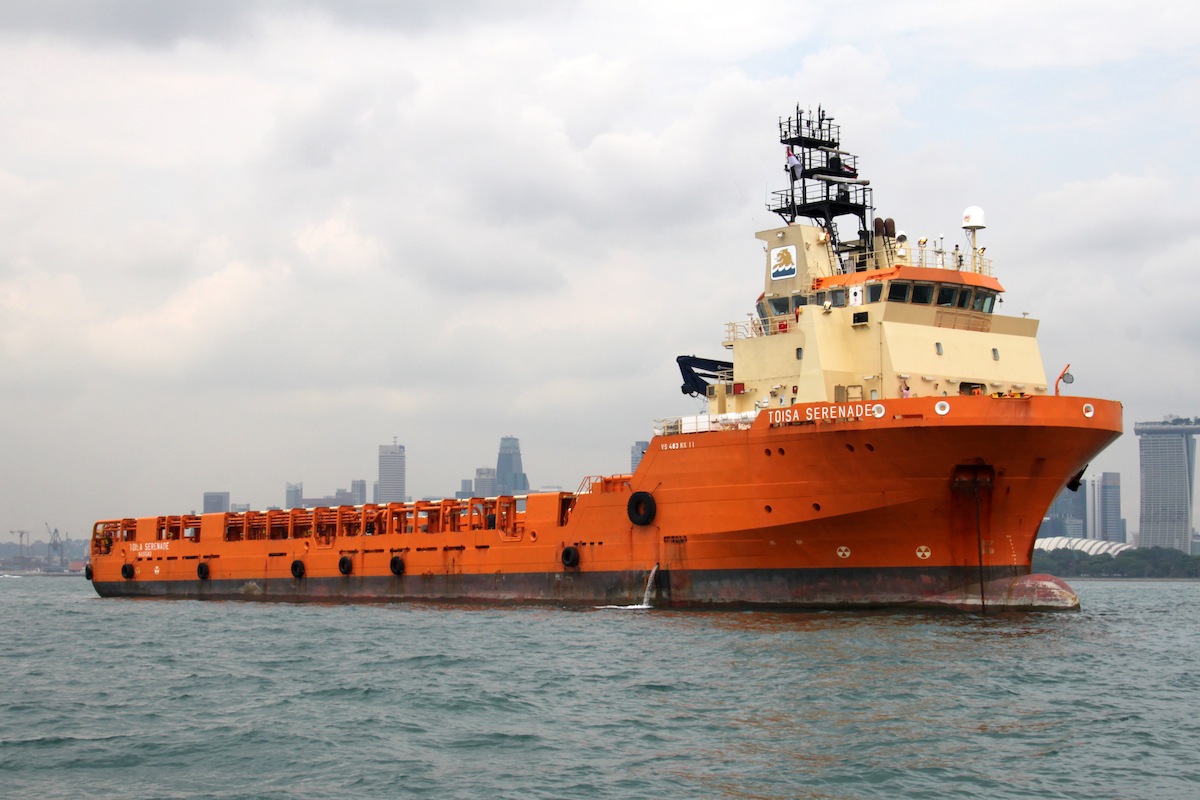
| type: vs 483 MkII | name: Toisa Serenade | PHOTO: Mike Prendergast, Josko Mikelic, Jan Plug | |||
 |
 |
.JPG) |
|||
| General | Propulsion | Cargo Capacity | |||
| Length OA | 87.4 m | Engines | 2 x MaK 9M25 | Fuel | 1170 m3 |
| Breadth | 19.0 m | BHP | 7909 | Pot water | 1227 m3 |
| DWT | 4900 t | For'd Thrusters | 2 x 830 kW | Mud | 946 m3 |
| Deck area | 1020 m2 | Az Thruster | Base oil | 226 m3 | |
| Aft Thrusters | 2 x 830 kW | Brine | 896 m3 | ||
| Year built | 2007 | DP I | Yes | Dry bulk | 432 m3 |
| Shipyard | Wuchang, China | Joystick | Yes | Tank Cleaning | - |
| Previous names | - | ||||
| Comments | - | ||||
| type: vs 483 MkII | name: Toisa Solitaire | PHOTO: Josko Mikelic | |||
 |
|||||
| General | Propulsion | Cargo Capacity | |||
| Length OA | 87.4 m | Engines | 2 x MaK 9M25 | Fuel | 1170 m3 |
| Breadth | 19.0 m | BHP | 7909 | Pot water | 1227 m3 |
| DWT | 4900 t | For'd Thrusters | 2 x 830 kW | Mud | 946 m3 |
| Deck area | 1020 m2 | Az Thruster | Base oil | 226 m3 | |
| Aft Thrusters | 2 x 830 kW | Brine | 896 m3 | ||
| Year built | 2009 | DP I | Yes | Dry bulk | 432 m3 |
| Shipyard | Wuchang, China | Joystick | Yes | Tank Cleaning | - |
| Previous names | - | ||||
| Comments | - | ||||
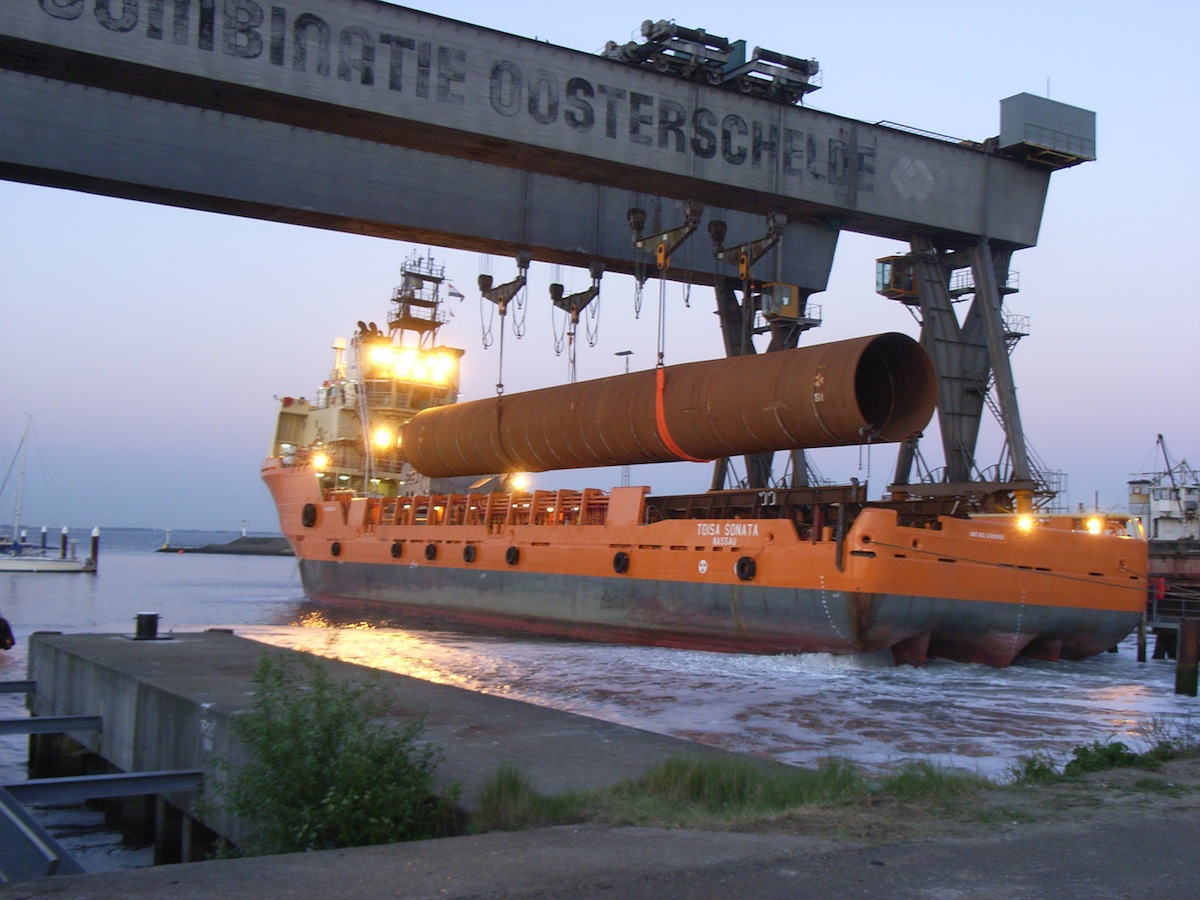
| type: vs 483 MkII | name: Toisa Sonata | PHOTO: Josko Mikelic, Ivan Cvrljak | |||
 |
|
 |
|||
| General | Propulsion | Cargo Capacity | |||
| Length OA | 87.4 m | Engines | 2 x MaK 9M25 | Fuel | 1170 m3 |
| Breadth | 19.0 m | BHP | 7909 | Pot water | 1227 m3 |
| DWT | 4900 t | For'd Thrusters | 2 x 830 kW | Mud | 946 m3 |
| Deck area | 1020 m2 | Az Thruster | Base oil | 226 m3 | |
| Aft Thrusters | 2 x 830 kW | Brine | 896 m3 | ||
| Year built | 2009 | DP I | Yes | Dry bulk | 432 m3 |
| Shipyard | Wuchang, China | Joystick | Yes | Tank Cleaning | - |
| Previous names | - | ||||
| Comments | - | ||||
|
||||||||||||||||||||||||||||||||||||||||||||||||||||||||||||||||||||||||


|
||||||||||||||||||||||||||||||||||||||||||||||||||||||||||||||||||||||||


|
||||||||||||||||||||||||||||||||||||||||||||||||||||||||||||||||||||||||
.JPG)
.JPG)
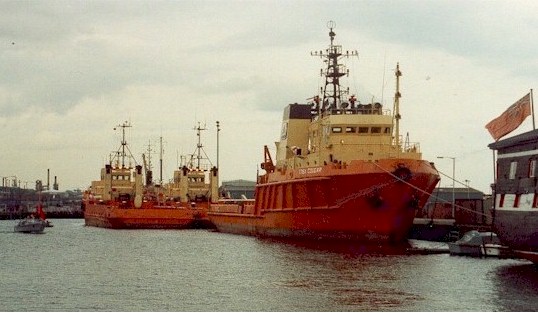
| TYPE: | NAME: Toisa Cougar | PHOTO: Vic Gibson | |||
 |
|||||
|
GENERAL |
PROPULSION |
EQUIPMENT |
|||
| Length OA | 60.86 m | Engines | 2 x MAN 8L 20 | Workdrum pull | - |
| Breadth | 13.0 m | BHP | 4000 | Capacity 1 | - |
| DWT | 1077 t | kW | 2940 | Capacity 2 | - |
| Deck area | 310 m2 | For'd Thruster | 1 x 500 bhp | Towdrum pull | - |
| Fuel | 404 m3 | Az Thruster | - | Capacity 1 | - |
| Pot water | 362 m3 | Aft Thrusters | - | Capacity 2 | - |
| Mud | - | Bollard pull | 40 t | Sharks Jaw | - |
| Brine | - | DP | - | Cranes | - |
| Dry bulk | - | Joystick | Poscon | Tank cleaning | - |
| Year built | 1984 | Shipyard | China Corp | ||
| Previous names | SSS Foochow, TNT Cougar | ||||
| Comments | This may actually be a platform ship[ even though it looks identical to the Gryphon. | ||||
| TYPE: CLYD 361 | NAME: Toisa Panther | PHOTO: Toisa Panther Crew | |||
 |
|||||
| General | Propulsion | Cargo Capacity | |||
| Length OA | 61.59m | Engines | Yanmar Diesel | Fuel | 256m3 |
| Breadth | 11.6m | BHP | 3520 | Pot water | 149m3 |
| DWT | 1137m | For'd Thrusters | 1 | Mud | 336m3 |
| Deck area | 333m2 | Aft Thrusters | 2 | Base oil | |
| Joystick | GEC Gem 80 | Brine | |||
| Year built | 1983 | DP | Dry bulk | 232m3 | |
| Shipyard | Dunston | Tank Cleaning | |||
| Previous names | - | ||||
| Comments | - | ||||
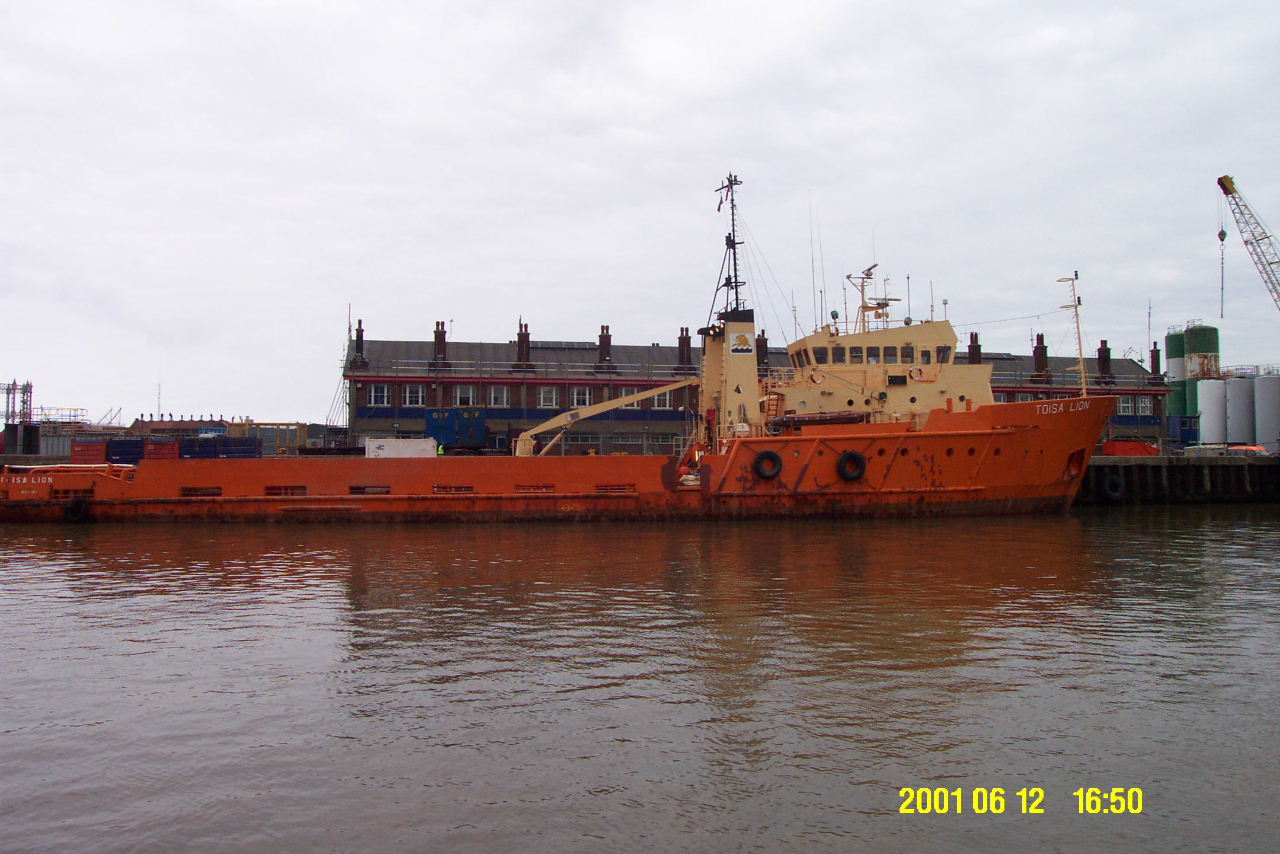
| TYPE: CLYD 361 | NAME: Toisa Lion | PHOTO: Peter Taylor | |||
 |
|||||
| General | Propulsion | Cargo Capacity | |||
| Length OA | 61.59m | Engines | Yanmar Diesel | Fuel | 256m3 |
| Breadth | 11.6m | BHP | 3520 | Pot water | 149m3 |
| DWT | 1137m | For'd Thrusters | 1 | Mud | 336m3 |
| Deck area | 333m2 | Aft Thrusters | 2 | Base oil | |
| Joystick | GEC Gem 80 | Brine | |||
| Year built | 1983 | DP | Dry bulk | 232m3 | |
| Shipyard | Dunston | Tank Cleaning | |||
| Previous names | - | ||||
| Comments | This ship sold in 2010 to Indonesian buyers. | ||||
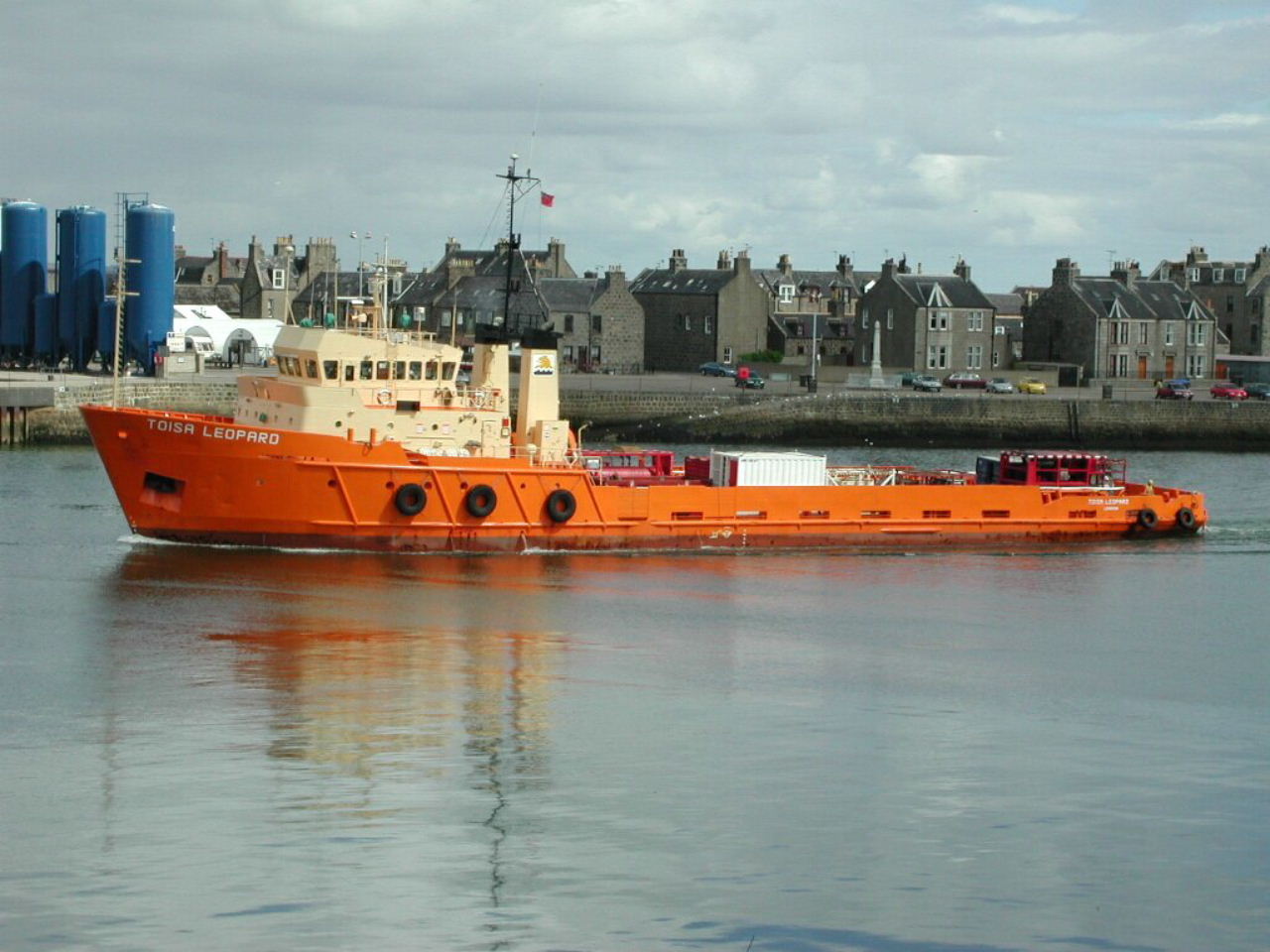
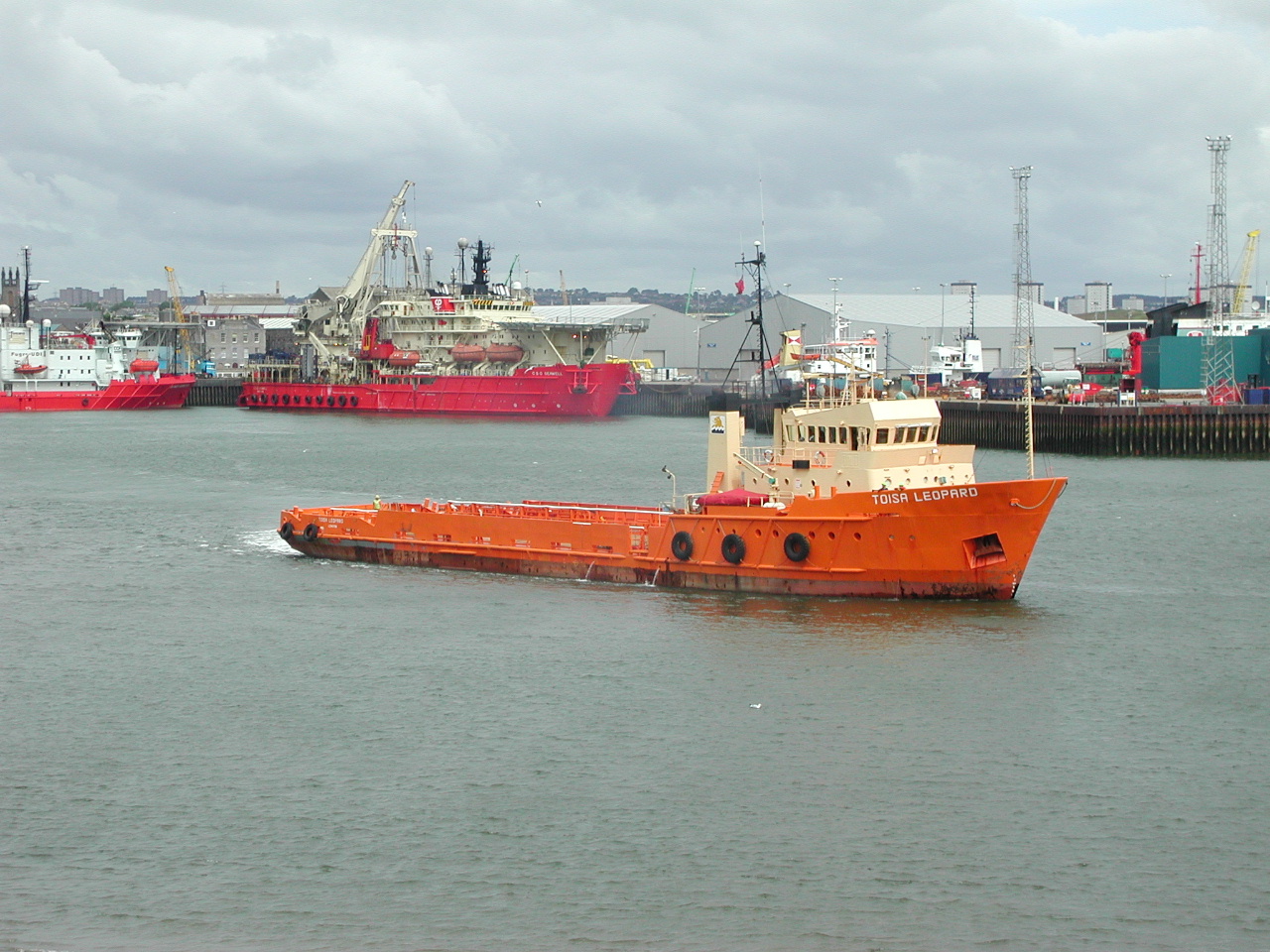
| TYPE: CLYD 361 | NAME: Toisa Leopard | PHOTO: George Craigen | |||
 |
 |
 |
|||
| General | Propulsion | Cargo Capacity | |||
| Length OA | 61.59m | Engines | Yanmar Diesel | Fuel | 256m3 |
| Breadth | 11.6m | BHP | 3520 | Pot water | 149m3 |
| DWT | 1137m | For'd Thrusters | 1 | Mud | 336m3 |
| Deck area | 333m2 | Aft Thrusters | 2 | Base oil | |
| Joystick | GEC Gem 80 | Brine | |||
| Year built | 1983 | DP | Dry bulk | 232m3 | |
| Shipyard | Dunston | Tank Cleaning | |||
| Previous names | - | ||||
| Comments | Sold to Al Mataf Shipping, a UAE shipowner. | ||||
| TYPE: CLYD 361 | NAME: Toisa Tiger | PHOTO: George Craigen | |||
 |
|||||
| General | Propulsion | Cargo Capacity | |||
| Length OA | 61.59m | Engines | Yanmar Diesel | Fuel | 256m3 |
| Breadth | 11.6m | BHP | 3520 | Pot water | 149m3 |
| DWT | 1137m | For'd Thrusters | 1 | Mud | 336m3 |
| Deck area | 333m2 | Aft Thrusters | 2 | Base oil | |
| Joystick | GEC Gem 80 | Brine | |||
| Year built | 1983 | DP | Dry bulk | 232m3 | |
| Shipyard | Dunston | Tank Cleaning | |||
| Previous names | - | ||||
| Comments | This ship appears to have been sold, but no details to hand. | ||||
| TYPE: | NAME: Toisa Polaris | PHOTO: Vic Gibson | |||
 |
 |
 |
|||
|
GENERAL |
PROPULSION |
EQUIPMENT |
|||
| Length OA | 113.57 m | Engines | 4 x Wartsila 9L26 | Workdrum pull | - |
| Breadth | 22 m | BHP | Capacity 1 | - | |
| DWT | 5500 t | kW | 10720 kW | Capacity 2 | - |
| Deck area | 700 m2 | For'd Thruster | 3 x 1335 kW | Accomm berths | 98 |
| Fuel | 1300 m3 | Az Thruster | - | Storage capacity |
1 carousel |
| Pot water | 460 m3 | Aft Thrusters | 2 x 2200 kW | ROV | - |
| Mud | - | Bollard pull | - | Diving Capability | 18 Men |
| Brine | - | DP II | Simrad SDP 21 | Cranes | 1 x 150 t |
| Dry bulk | - | Joystick | Tank cleaning | - | |
| Year built/due | 1999 | Shipyard | - | ||
| Previous names | - | ||||
| Comments | Sold to Bibby Offshoire | ||||
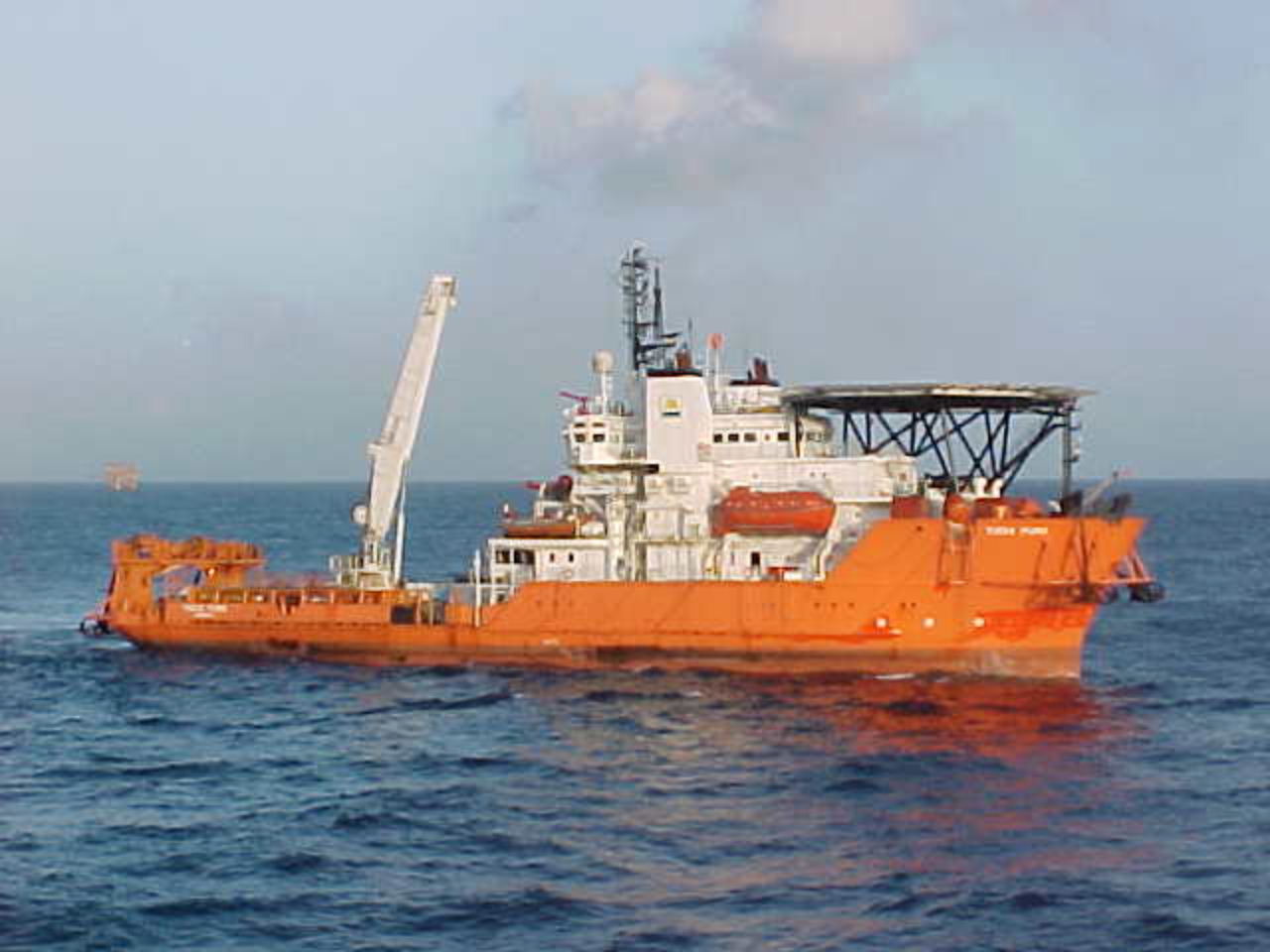
| TYPE: | NAME: Toisa Puma | PHOTO: Ron Jansen, Martin Cardos | |||
 |
 |
||||
|
GENERAL |
PROPULSION |
EQUIPMENT |
|||
| Length OA | 77.0 m | Engines | 3 x Fuji, 1 x Cat | Workdrum pull | - |
| Breadth | 16.8 m | BHP | 11060 | Capacity 1 | - |
| DWT | - | kW | 8130 | Capacity 2 | - |
| Deck area | - | For'd Thruster | 3 x 825 kW | Accomm berths | 60 |
| Fuel | - | Az Thruster | - | Storage capacity |
- |
| Pot water | - | Aft Az Props | 2 x 1500 kW | ROV | - |
| Mud | - | Bollard pull | - | Diving Capability | 12 divers |
| Brine | - | DP II | - | Cranes | 1 x 25 t |
| Dry bulk | - | Joystick | - | Tank cleaning | - |
| Year built | 1985 | Shipyard | Irnamura | ||
| Previous names | Norian, Pacific Attawhai | ||||
| Comments | Sold to Oceanographia and renamed Caballo Eclipse in 2012 | ||||
| TYPE: | NAME: Toisa Sentinel | PHOTO: | |||
|
GENERAL |
PROPULSION |
EQUIPMENT |
|||
| Length OA | 94.3 m | Engines | 4 x Br Polar F216V | Workdrum pull | - |
| Breadth | 19.5 m | BHP | 12972 | Capacity 1 | - |
| DWT | 3025 t | kW | 9540 | Capacity 2 | - |
| Deck area | 775 m2 | For'd Thruster | 2 x 800 bhp 1 x 1000 bhp |
Accomm berths | 70 |
| Fuel | 1808 m3 | Az Thruster | - | Storage capacity |
- |
| Pot water | 587 m3 | Aft Thrusters | 2 x 800 bhp | ROV | - |
| Mud | - | Bollard pull | - | Diving Capability | - |
| Brine | - | DP II | Simrad ADP 703 | Cranes | 1 x 10 t, 1 x5 t |
| Dry bulk | - | Joystick | - | Tank cleaning | - |
| Year built | 1982 | Shipyard | Richards, Low | ||
| Previous names | Seagair, TNT Sentinel | ||||
| Comments | Sold to middle eastern buyers in May 2014. | ||||